
Table of Contents
Maintaining vegetation on steep, uneven or obstructed ground is very different from mowing a conventional lawn. Slopes can affect machine stability, wet grass can reduce traction, and hidden stones or branches can become dangerous projectiles. Roads, water, solar panels and other structures may further restrict the operator’s working position.
A remote control lawn mower allows the operator to control movement and cutting functions from a distance rather than riding directly on the machine. Combined with a low-profile body, crawler tracks and adjustable cutting height, this configuration can support vegetation management in areas that are difficult to access with ordinary mowing equipment.
This guide covers:
- Seven practical applications for remote-controlled mowing
- The difference between remote control and autonomous mowers
- How crawler tracks support uneven-ground operation
- Which specifications matter when selecting a machine
- Why the maximum stated slope is not the only safety factor
- How cutting width and cutting height affect different vegetation
- What to inspect before each mowing operation
What Is a Remote Control Lawn Mower?
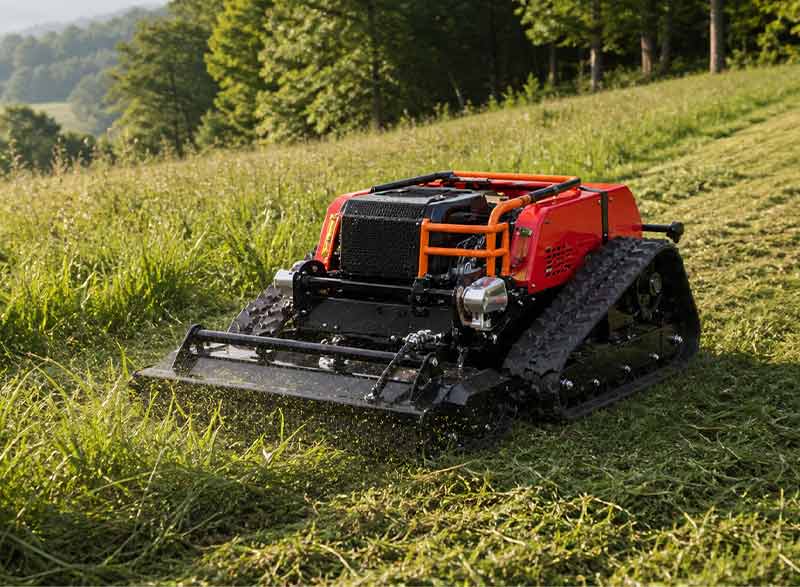
A remote control lawn mower is a powered cutting machine operated through a handheld transmitter. The operator sends steering, travel and cutting commands while standing away from the equipment.
Unlike an autonomous robotic mower, a remote-controlled machine does not normally follow a pre-programmed boundary or make independent route decisions. The operator observes the terrain and controls the mower according to real-time ground conditions.
This distinction makes a remote control mower particularly useful for changing or irregular worksites. A roadside contractor, farm operator or solar-facility maintenance team may work in a different area each day, making fixed guide wires or pre-programmed maps less practical.
| Equipment type | Control method | Typical terrain | Common purpose |
|---|---|---|---|
| Push mower | Operator walks behind machine | Small, relatively level lawns | Routine garden maintenance |
| Ride-on mower | Operator sits on machine | Open and moderately level areas | Large lawns and managed grounds |
| Robotic mower | Pre-programmed or autonomous navigation | Defined and repeatedly maintained areas | Regular lawn cutting |
| Remote control lawn mower | Operator controls from a distance | Slopes, rough ground and obstructed areas | Commercial vegetation management |
| Tractor-mounted mower | Operated from a tractor | Large open fields and verges | High-volume agricultural or roadside work |
Mingyang’s remote control lawn mower range includes crawler models with different cutting widths for slope, farm and rough-terrain applications.
Why Use Remote Control on Slopes?
The main purpose of remote operation is to separate the operator from the moving mower. This can be useful where riding directly on a machine would expose the operator to an incline, drop, water edge, traffic area or unstable surface.
Remote control does not eliminate all hazards. The operator must still remain within the permitted control range, maintain a clear line of sight and choose a safe standing position. Bystanders must remain outside the work area, especially where blades may strike and discharge stones, branches or other debris.
Low-Profile Machine Design
A low body can help keep the machine’s mass closer to the ground. This is beneficial for slope stability and also allows some crawler mowers to work under low structures.
However, low height alone does not establish a safe working angle. Machine orientation, surface grip, vegetation, ground moisture and hidden depressions all influence actual stability.
Crawler Track System
Crawler tracks create a relatively long ground-contact area and can provide useful traction on soil, grass and uneven surfaces. They also distribute machine weight across a broader footprint than narrow wheels.
Traction varies with tread condition and terrain. Wet clay, loose stones, deep mud and flattened wet grass may still allow the machine to slide.
Operator Distance
Remote control enables the operator to select a position with better visibility and fewer immediate terrain hazards. The operator should not stand directly downhill from the mower because a sliding or uncontrolled machine could enter that area.
The safest operating position depends on the manufacturer’s instructions, slope direction, surrounding obstacles and the potential path of thrown objects.
1. Steep Roadside and Highway Embankments
Roadside vegetation must be controlled to maintain sightlines, improve drainage access and prevent excessive growth around signs, barriers and infrastructure. Embankments can be steep, irregular and close to moving traffic, making them challenging for conventional ride-on equipment.
A remote control slope mower can operate while the user remains away from the mower itself. Its crawler tracks can support controlled movement across grass-covered embankments where suitable ground conditions exist.
Important Roadside Considerations
Roadside mowing requires more than selecting a machine with a high slope rating. The work plan should address:
- Traffic control and warning arrangements
- Safe operator position
- Guardrails, culverts and drainage channels
- Stones, litter and metal debris
- Visibility around bends and vegetation
- Potential mower movement toward the roadway
- Safe transport and unloading location
The mowing area should be inspected before operation. Traffic-control responsibilities and local roadside work requirements must also be confirmed.
2. Solar Farm Vegetation Management
Ground-mounted solar installations create long rows of low structures, support posts, cables and restricted spaces. Excessive vegetation can obstruct inspection routes, interfere with drainage and complicate access for maintenance teams.
A compact remote control lawn mower can work between panel rows and, where sufficient clearance exists, under portions of the array. Its low-profile structure can reduce the need for extensive manual trimming in spaces that larger equipment cannot enter.
Selecting a Mower for Solar Arrays
Important specifications include:
- Overall machine height
- Cutting width
- Turning space between rows
- Remote-control visibility
- Cutting-height adjustment
- Track contact with the soil
- Ability to maneuver around posts
- Protection of cables and electrical infrastructure
The machine should never be driven over exposed cables, grounding conductors or other electrical components. Site drawings and facility operating procedures should be reviewed before mowing begins.
A wider cutting deck may improve productivity in open spaces, while a smaller model can be easier to position around closely spaced panel supports. The selection should follow row width and ground clearance rather than cutting capacity alone.
3. Orchards, Vineyards and Farm Slopes
Orchards and vineyards often combine narrow rows, uneven ground, irrigation lines, low branches and changing slopes. Vegetation may need to be controlled without damaging trunks, roots or crop-support structures.
A crawler mower can travel between rows while the operator observes the equipment from a suitable position. Remote operation also helps the user monitor clearance around trees, vines and irrigation hardware.
Orchard and Vineyard Challenges
The mower may encounter:
- Fallen branches
- Fruit and pruning debris
- Exposed roots
- Irrigation pipes
- Support wires
- Soft ground after watering
- Cross-slopes between rows
- Low branches that obstruct visibility
The work area should be cleared before cutting wherever practical. If grass conceals irrigation components or support wires, mowing should proceed slowly until the route has been verified.
Mingyang’s 550 mm HT550A Remote Control Crawler Lawn Mower provides a narrower cutting format for applications where maneuverability and row spacing are important.
4. Pond Banks, Drainage Channels and Reservoir Edges
Vegetation around ponds and drainage infrastructure can restrict water flow, conceal erosion and make inspections difficult. These locations are also hazardous because the ground may be soft, undercut or slippery near the water.
A remote control lawn mower allows the operator to remain farther from the immediate bank while directing the machine across suitable sections of the slope.
Water-Edge Work Requires Extra Caution
A remotely controlled machine can still slide or overturn. Before work begins, inspect:
- Bank firmness
- Signs of erosion
- Waterlogged soil
- Hidden holes
- Sudden changes in slope
- Distance from the water edge
- Safe recovery options
- Operator escape route
The operator should not assume that an apparently dry surface has sufficient bearing capacity. Vegetation can hide washed-out areas or unsupported bank edges.
Remote operation reduces the need to ride on the mower, but it does not make unstable banks safe. Sections with severe erosion, poor visibility or insufficient recovery space may require a different vegetation-management method.
5. Utility Corridors and Power-Line Rights-of-Way
Utility corridors frequently contain steep access routes, drainage features, poles, inspection points and irregular vegetation. Vegetation control is needed to maintain access and visibility without damaging installed infrastructure.
A tracked remote control mower can be deployed in selected areas where larger tractors cannot turn or where ride-on operation would be impractical.
Obstacles Commonly Found in Utility Corridors
Operators should look for:
- Marker posts
- Guy wires
- Grounding equipment
- Cable covers
- Valve boxes
- Drainage structures
- Fencing
- Rock outcrops
- Discarded materials
Tall grass can hide many of these hazards. An initial walk-through should identify fixed obstacles and determine whether stones, metal or other objects need to be removed before mowing.
Where electrical equipment is present, the operator must maintain applicable clearances and follow the utility owner’s work procedures.
6. Municipal Parks and Difficult Public Landscapes
Public landscapes may contain open lawns as well as slopes around paths, bridges, lakes, retaining walls and drainage features. One type of mower may not be suitable for every part of the site.
A remote control lawn mower can complement conventional mowing equipment by handling areas that are too steep, narrow or obstructed for a ride-on machine.
Potential municipal applications include:
- Park embankments
- Stormwater retention areas
- Sloped road medians
- Land around public buildings
- Reservoir surroundings
- Grass under bridges
- Sloped cemetery areas
- Difficult sections of sports facilities
The OSHA-supported mowing and trimming safety guide emphasizes pre-operation inspection, work-area preparation, slope assessment, guards, personal protective equipment and control of thrown-object hazards. These principles remain relevant even when the operator controls the mower remotely.
Protecting Bystanders
Public sites require careful exclusion-zone planning. Stones, pieces of wire, glass and other objects can be discharged by the cutting system.
Mowing should be scheduled when pedestrian activity is low, and the area should be isolated according to local requirements. The operator should stop the mower if a pedestrian, vehicle or animal enters the work zone.
7. Rough Grass, Brush and Neglected Land
Vacant properties, farm boundaries and infrequently maintained slopes may contain tall grass, dense weeds, brambles and light brush. These conditions require a different cutting approach from regular lawn maintenance.
A commercial remote control mower with suitable power and cutting structure can reduce overgrowth where the vegetation remains within the manufacturer’s stated capacity.
Evaluate Vegetation Before Cutting
The term “rough land” can include very different conditions. Before selecting a mower, determine:
- Maximum vegetation height
- Stem or brush thickness
- Density of the growth
- Ground visibility
- Presence of stones or construction debris
- Required finished cutting height
- Area to be covered
- Frequency of future maintenance
Dense woody growth may require specialized forestry equipment rather than a lawn mower. A machine should not be selected solely because its engine is powerful; blade design, deck construction and permitted material size are equally important.
Comparing the HT550A and HT800A
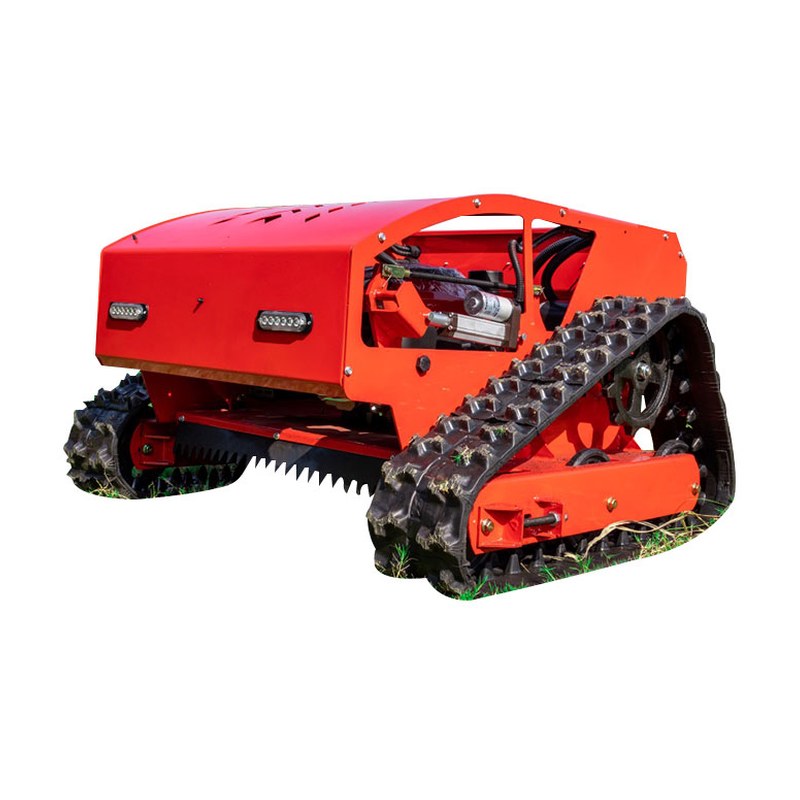
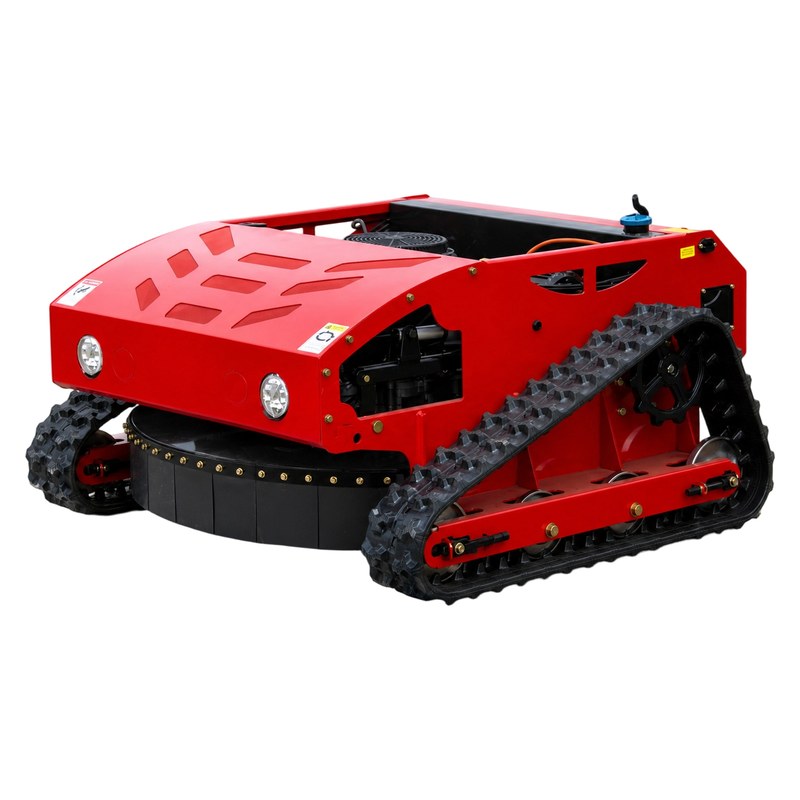
Mingyang currently provides remote-controlled crawler mowers in two main cutting-width formats.
| Selection factor | HT550A | HT800A |
|---|---|---|
| Cutting-width format | 550 mm | 800 mm |
| Primary advantage | Compact maneuverability | Wider coverage |
| Suitable direction | Narrow rows and restricted areas | Slopes and larger open areas |
| Control method | Remote control | Remote control |
| Undercarriage | Crawler tracks | Crawler tracks |
| Selection priority | Access and obstacle spacing | Coverage and slope application |
The HT800A Remote Control Crawler Slope Mower has an 800 mm cutting width, remotely adjustable deck, 20–180 mm cutting-height range and a stated maximum working slope of 45 degrees. The available product information also lists remote operation up to 680 m under suitable conditions.
The maximum remote range should not be treated as the recommended working distance. The operator still needs clear visibility, reliable signal conditions and sufficient ability to recognize people, obstacles and changes in terrain.
Similarly, the stated 45-degree working slope is a product limit under defined conditions, not a guarantee that every 45-degree site is safe. Surface grip, cross-slope orientation, moisture, holes, vegetation and machine condition can reduce the practical operating limit.
Specifications That Matter When Choosing a Remote Control Lawn Mower
A suitable mower must match both the vegetation and the worksite.
| Specification | Why It Matters | What to Confirm |
|---|---|---|
| Cutting width | Affects coverage and maneuverability | Open-area size and obstacle spacing |
| Cutting-height range | Determines the possible finished result | Vegetation type and required stubble height |
| Working slope | Indicates the manufacturer’s stated limit | Actual terrain, moisture and travel direction |
| Machine width | Determines access between rows and structures | Narrowest entrance and turning point |
| Machine height | Affects access under solar panels and branches | Lowest overhead clearance |
| Track dimensions | Influence traction and ground pressure | Soil type and expected surface conditions |
| Engine configuration | Affects cutting performance and serviceability | Vegetation load and local parts availability |
| Remote range | Defines the maximum communication distance | Safe line of sight and signal conditions |
| Emergency stop | Supports rapid shutdown | Control response and operator training |
| Deck adjustment | Helps adapt to varying vegetation | Manual or remote adjustment method |
| Machine weight | Influences transport and ground contact | Trailer capacity and soil-bearing strength |
Cutting Width
A wider deck can cover more ground per pass but may be harder to position around posts, trees and narrow rows. A smaller mower may require more passes yet offer better access and steering space.
Cutting Height
An adjustable deck allows the mower to handle different vegetation-management objectives. Low cutting may be suitable for regularly maintained areas, while tall or rough vegetation may require a higher first pass.
Cutting too low on uneven ground can cause blade contact with soil or hidden objects. The initial cutting height should reflect terrain visibility and vegetation condition.
Engine and Cutting Load
Tall, wet or dense grass increases load on the engine and cutting system. Travel speed may need to be reduced to maintain cutting quality and avoid repeated blockage.
Engine selection should also consider fuel availability, service access, destination-market requirements and expected working hours.
Remote Control Mower vs Robotic Mower
These machines are sometimes treated as the same category, but their operating models differ substantially.
| Comparison | Remote control mower | Robotic mower |
|---|---|---|
| Navigation | Directed continuously by an operator | Follows programmed or autonomous navigation |
| Worksite setup | Usually limited initial setup | May require mapping, boundaries or positioning system |
| Terrain response | Operator adapts immediately | Depends on sensors and programmed capability |
| Typical vegetation | Rough grass, slopes and changing sites | Regularly maintained grass |
| Daily deployment | Suitable for multiple changing locations | Best suited to repeated operation in a defined area |
| Operator involvement | Active control throughout work | Supervision varies by system |
| Obstacle judgment | Human operator observes conditions | Sensors and software identify obstacles |
A remote-controlled crawler mower is generally more appropriate for commercial contractors moving between different slopes and rough-terrain sites. A robotic mower is usually better suited to repeated maintenance of a predictable area.
Preparing the Worksite
Remote operation does not remove the need for site preparation. Hidden objects remain a major hazard because rotary cutting systems can discharge debris at high speed.
Before operation:
- Walk the proposed mowing route.
- Remove stones, wire, glass, branches and loose metal.
- Mark posts, holes, drains and other fixed obstacles.
- Check slope changes and soft ground.
- Establish an exclusion zone.
- Confirm that the operator has a clear line of sight.
- Identify a safe standing position.
- Test steering, cutting and emergency-stop functions.
- Confirm that all guards and covers are installed.
- Review the planned recovery method before entering difficult terrain.
The mower should not be started until people and animals are outside the potential discharge and travel area.
Daily Inspection Checklist
A crawler mower should be inspected before each work period.
| Inspection area | Items to check |
|---|---|
| Cutting system | Blade condition, mounting, wear and foreign material |
| Cutting deck | Damage, blockage, guards and adjustment mechanism |
| Tracks | Tension, cracks, lodged stones and visible wear |
| Remote control | Battery level, communication and emergency stop |
| Engine | Oil, fuel, cooling and visible leakage |
| Electrical system | Wiring, connectors and protective covers |
| Fasteners | Loose bolts around deck, tracks and body |
| Work area | Stones, wire, holes, slopes, people and traffic |
| Safety labels | Legibility and condition |
| Transport system | Ramps, tie-down points and trailer capacity |
The engine and cutting system should be shut down before clearing debris or inspecting moving components. Maintenance procedures must follow the equipment manual.
Safe Operation on Slopes
A machine’s maximum working slope should be treated as a boundary, not as a normal target.
Safe slope operation requires consideration of:
- Traveling across or up and down the slope
- Wetness and type of ground cover
- Loose soil, stones and hidden holes
- Track condition and tension
- Cutting-deck position
- Speed and steering inputs
- Distance from edges and water
- Operator visibility
- Potential sliding direction
- Manufacturer instructions
Sudden steering changes can affect stability and track grip. Travel and turning should remain controlled, particularly on cross-slopes.
The operator should never stand directly below the machine. If traction is lost, the mower may slide downhill even when the tracks continue to turn.
OEM Configuration for Different Markets
Commercial mower requirements vary according to terrain, vegetation, operating practices and destination-market expectations. A supplier may therefore need to confirm more than cutting width.
Mingyang’s OEM and ODM construction machinery services can include machine configuration, engine options, colors, logos, labels and packaging. Before confirming a remote control lawn mower, provide:
- Intended application
- Typical and maximum slope
- Vegetation type and height
- Required cutting width
- Preferred cutting-height range
- Narrowest access point
- Expected daily working hours
- Destination country
- Engine requirements
- Branding and packaging needs
- Spare-parts requirements
- Required manuals and supporting documents
Actual available options should be confirmed for the selected mower model.
FAQ
How steep a slope can a remote control lawn mower handle?
The limit depends on the machine design and actual terrain. The HT800A has a stated maximum working slope of 45 degrees, but this is not a universal safe angle. Wet grass, loose soil, hidden holes, cross-slope travel and worn tracks can reduce traction and stability, so every site must be assessed separately.
Can a remote control lawn mower cut tall grass and brush?
It can manage vegetation within the rated capacity of its engine, blades and cutting deck. Tall or dense growth may require a higher first cut and slower travel. Thick woody stems, stones or construction debris can exceed a mower’s intended use, so vegetation and hidden objects should be inspected before operation.
Is a remote control mower the same as a robotic mower?
No. A remote-controlled mower is continuously directed by an operator using a transmitter. A robotic mower generally follows boundaries, mapping or autonomous navigation. Remote control is more suitable for changing slopes and rough worksites, while robotic systems normally maintain predictable areas repeatedly.
Can a crawler mower work under solar panels?
A low-profile crawler mower may operate between or under panels when its overall height, cutting width and turning space fit the array. Ground cables, support posts and electrical components must be identified first. Clearance and facility procedures should be confirmed before the machine enters the solar installation.
What should be checked before using a remote control mower?
Inspect the blades, deck, guards, tracks, fasteners, engine, wiring, remote-control battery and emergency-stop function. Walk the work area to remove stones, wire and branches, mark hidden obstacles and assess the slope. The operator should maintain line of sight and keep bystanders outside the work zone.
Conclusion
A remote control lawn mower is most useful when conventional equipment cannot safely or efficiently reach the vegetation. Roadside slopes, solar farms, orchards, pond banks, utility corridors, municipal landscapes and rough land all present different combinations of access, traction, visibility and cutting requirements.
The right model should be selected by comparing cutting width, machine dimensions, working slope, cutting-height range, track system, engine configuration and actual vegetation. A wider mower such as the HT800A can improve coverage in larger areas, while the narrower HT550A format may provide better maneuverability around closely spaced obstacles.
Remote control creates distance between the operator and the mower, but it does not replace site inspection, exclusion zones, proper training or conservative slope assessment. Reliable performance depends on matching the machine to the terrain and operating it within real—not theoretical—site conditions.