Daftar Isi
A mini ekskavator dan a skid steer loader keduanya kompak, mesin bertenaga hidrolik yang biasa digunakan dalam konstruksi, lansekap, pertanian dan pemeliharaan properti. Ukuran dan aplikasi mereka terkadang tumpang tindih, tetapi desain dasar mereka melayani tujuan yang berbeda.
Sebuah mini excavator dibangun terutama untuk penggalian terkontrol di bawah permukaan tanah. Boom, lengan, ember dan struktur atasnya yang berputar memberikan kedalaman, jangkauan dan penempatan material yang tepat. Sebuah skid steer dirancang terutama untuk mengangkat, mendorong, membawa dan memuat material. Lengan angkatnya yang dipasang di depan, jarak sumbu roda yang kompak dan perubahan pemasangan yang cepat membuatnya efisien untuk pekerjaan di permukaan.
Perbandingan ini menjelaskan:
- Mesin mana yang berkinerja lebih baik untuk menggali dan menggali parit
- Pilihan mana yang lebih efisien untuk pemuatan dan pengangkutan material
- Bagaimana setiap mesin bekerja di ruang sempit atau terbatas
- Bagaimana roda dan trek mempengaruhi kondisi tanah yang berbeda
- Lampiran mana yang cocok untuk setiap jenis peralatan
- Apa yang harus dibandingkan sebelum memilih mesin atau rangkaian produk
- Saat menggunakan kedua mesin dapat memberikan efisiensi lokasi kerja terbaik
Apa Perbedaan Utama Antara Mini Excavator dan Skid Steer?
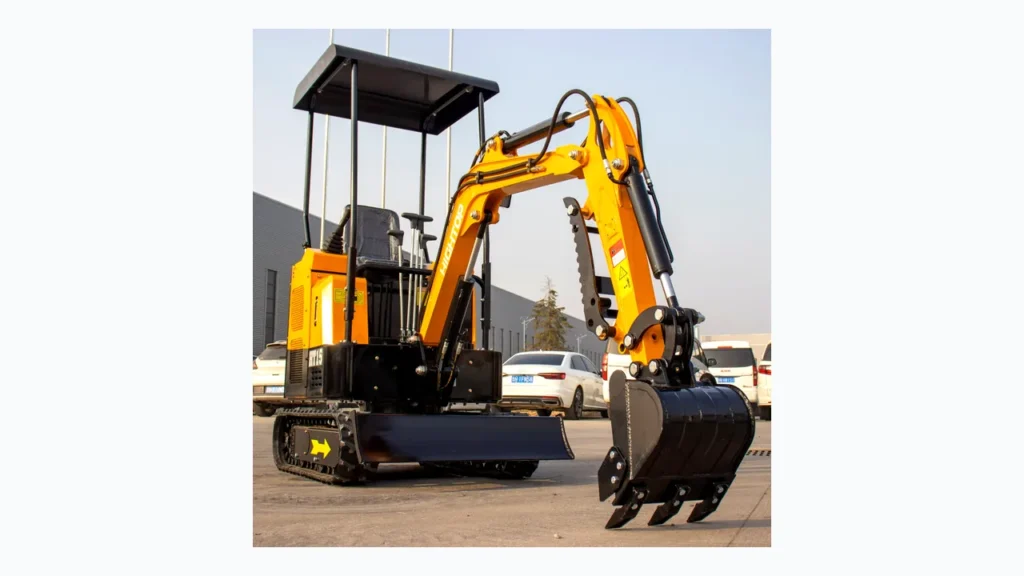
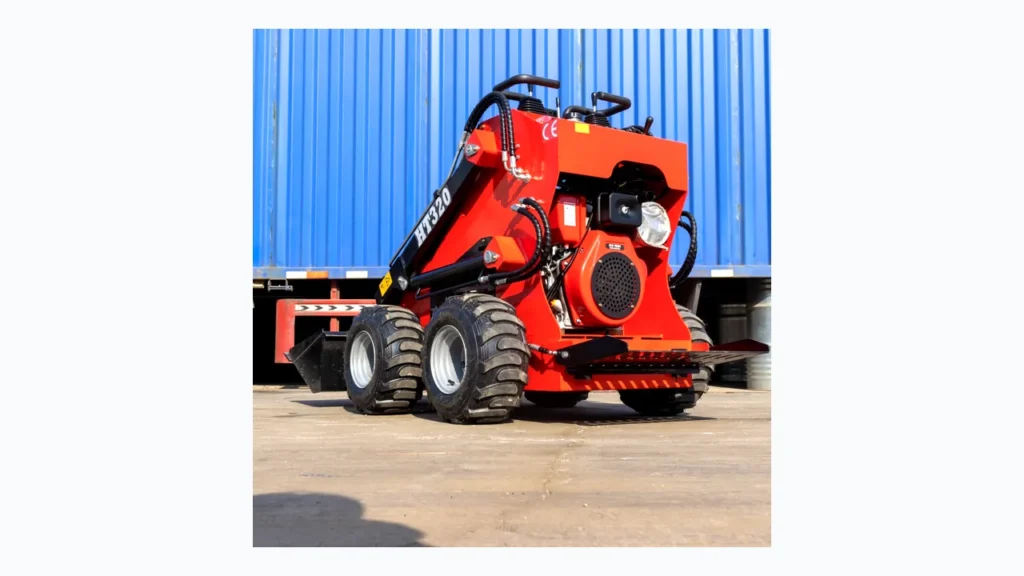
Perbedaan utama adalah arah dan jenis pekerjaan yang dirancang untuk dilakukan oleh setiap mesin.
Sebuah mini excavator menggunakan boom dan lengan yang diartikulasikan untuk menggali di bawah tingkat jejaknya. Struktur atasnya dapat berputar, memungkinkan operator untuk menggali dari satu posisi dan menempatkan material di samping atau di belakang mesin.
Sebuah skid steer loader menggunakan lengan angkat depan untuk mendorong ke material, mengangkatnya dan membawanya melintasi situs. Ini berbelok dengan menggerakkan roda kiri dan kanannya atau trek dengan kecepatan yang berbeda, memberikan radius belok yang sangat kecil.
Secara sederhana, mini excavator mengkhususkan diri dalam menggali dan mengendalikan jangkauan, sedangkan skid steer mengkhususkan diri dalam pemuatan, membawa dan persiapan permukaan.
| Area perbandingan | Mini ekskavator | Skid steer loader |
|---|---|---|
| Fungsi primer | Menggali di bawah permukaan tanah | Memuat dan memindahkan material |
| Struktur kerja | Boom, lengan dan tubuh bagian atas berputar | Lengan angkat depan dan sasis kaku |
| Pergerakan material | Menggali dan menempatkan material dalam jangkauannya | Membawa materi melintasi lokasi kerja |
| Metode pembubutan | Struktur atas berputar dan perjalanan terlacak | Gerakan roda atau track diferensial |
| Kekuatan paling terkenal | Menggali kedalaman dan presisi | Kecepatan memuat dan keserbagunaan lampiran |
| Aplikasi khas | Parit, drainase, pondasi dan pembongkaran | Penilaian, pemuatan, pembersihan, dan penanganan palet |
| Undercarriage umum | Trek karet atau baja | Roda atau trek crawler |
| Posisi kerja | Seringkali tetap diam saat menggali | Sering bepergian di antara titik pemuatan |
Oleh karena itu keputusan yang tepat dimulai dengan tugas harian utama mesin — bukan dengan jumlah lampiran opsional yang ditawarkan.
Kinerja Menggali: Mini Excavator Memiliki Keuntungan
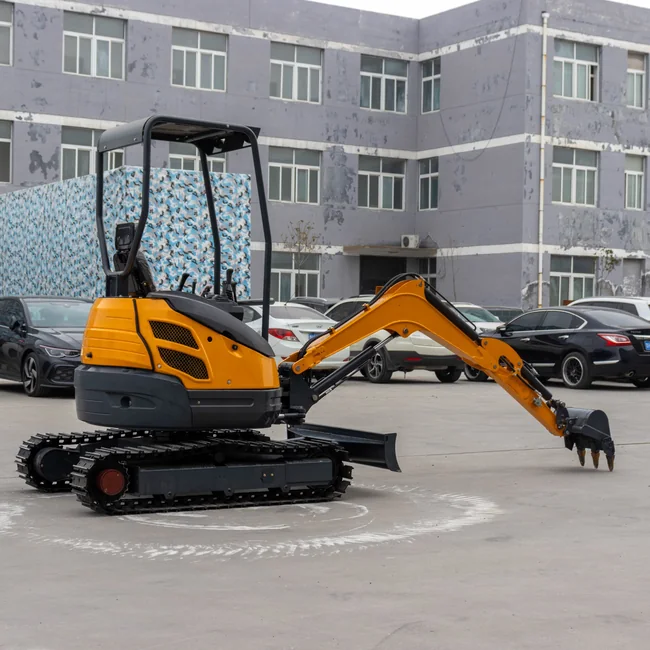
Sebuah excavator mini secara khusus direkayasa untuk menembus tanah, menarik material ke arah mesin dan melepaskannya di lokasi yang terkendali. Panjang boom, geometri lengan, gaya breakout bucket dan kontrol hidrolik menentukan jangkauan kerjanya.
Struktur atas yang berputar juga memungkinkan operator untuk menggali parit dan menempatkan kerusakan di sepanjang kedua sisi tanpa berulang kali memutar seluruh undercarriage. Ini sangat berguna di dekat dinding, pagar, jalan dan struktur yang ada.
milik Mingyang mini excavator range termasuk model dari kelas satu ton ke mesin kompak yang lebih besar. Ini memungkinkan untuk membandingkan lebar akses, kedalaman penggalian dan kemampuan hidrolik sesuai dengan proyek.
Trenching dan Drainase
Untuk pipa air, saluran listrik, sistem irigasi dan saluran drainase, excavator mini biasanya memberikan kontrol kedalaman dan penyelarasan parit yang lebih baik. Lebar ember yang berbeda dapat dipilih untuk mengurangi pembuangan tanah yang tidak perlu.
Sebelum penggalian dimulai, utilitas bawah tanah dan kondisi tanah di sekitarnya harus dinilai. Persyaratan yang berlaku seperti Peraturan penggalian khusus OSHA harus dipertimbangkan bersamaan dengan peraturan keselamatan setempat.
Yayasan dan Lansekap
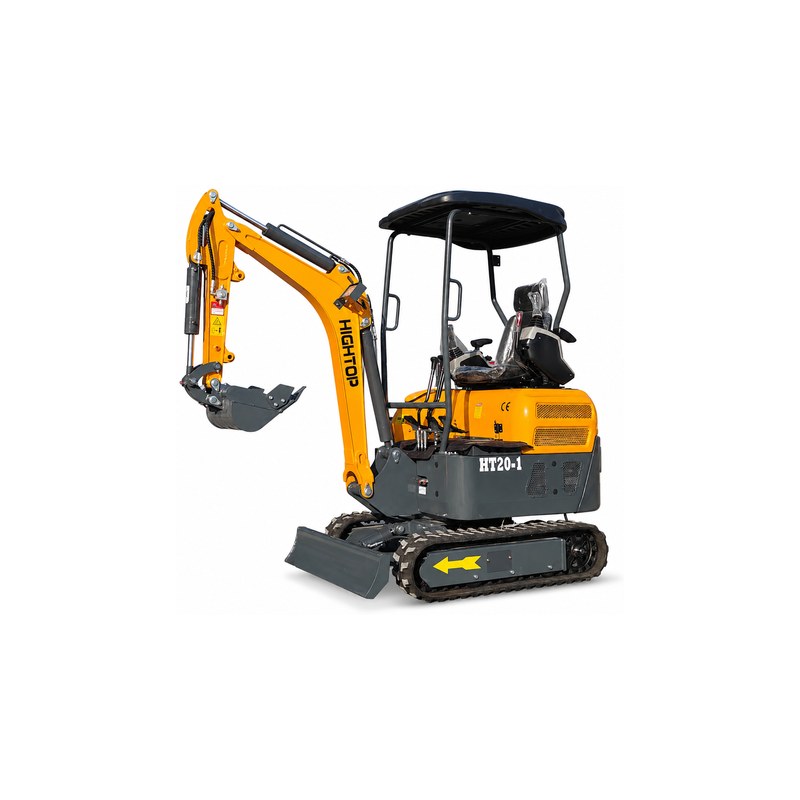
Excavator kompak dapat menyiapkan pijakan kecil, menggali lubang tanam, menghilangkan tanah dan membentuk fitur lanskap. Ledakan ayunan dapat memberikan fleksibilitas tambahan saat bekerja di samping struktur atau mengikuti garis parit sempit.
Misalnya, the HT20-1 2 Ton Hydraulic Mini Excavator menggabungkan 2.000 kg berat operasi, sekitar 2.060 mm menggali kedalaman dan dipertukarkan pilihan kerja-alat. Konfigurasi ini dimaksudkan untuk pekerjaan penggalian lebih substansial dari mesin permukaan-loading.
Bisakah Skid Steer Dig?
Sebuah skid steer dapat mengikis tanah yang gembur, menghilangkan lapisan dangkal dan melakukan penggalian ringan dengan ember. Sebuah trencher atau backhoe lampiran dapat memperpanjang kemampuannya, tetapi tidak mengubah loader menjadi mini excavator penuh.
Geometri lengan angkat pemuat tetap dioptimalkan untuk mendorong dan mengangkat daripada mencapai ke bawah ke parit. Jika pekerjaan rutin membutuhkan kedalaman yang terkendali, dinding parit vertikal atau penggalian dekat dengan rintangan, ekskavator mini biasanya merupakan platform yang lebih tepat.
Memuat dan Membawa: Skid Steer Memiliki Keuntungan
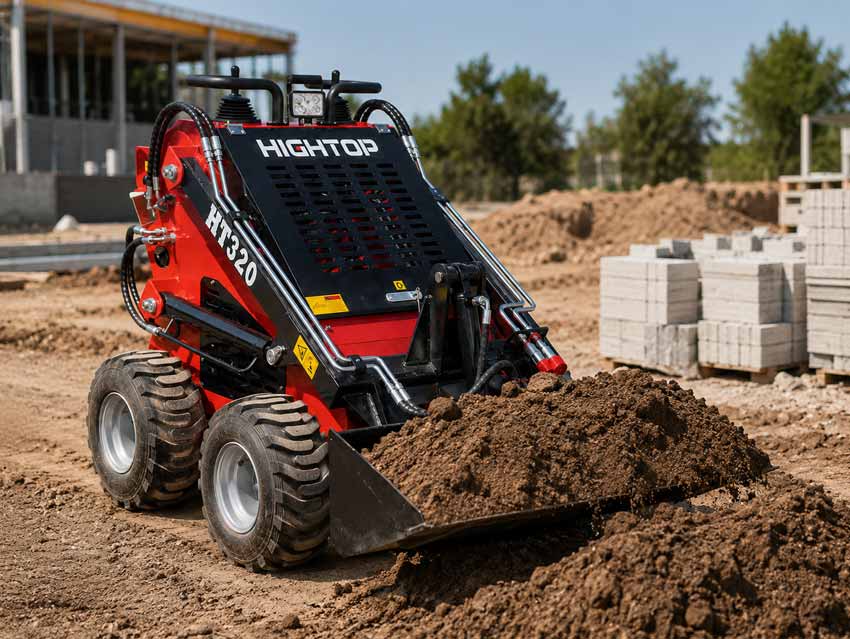
Skid steer lebih efisien ketika tugas utama adalah memindahkan material lepas berulang kali melintasi suatu situs. Embernya diposisikan di depan mesin, memungkinkan operator untuk masuk ke timbunan, mengangkat beban, melakukan perjalanan ke titik lain dan melepaskannya.
Pola operasi ini sangat cocok untuk:
- Memuat tanah, kerikil, pasir atau puing-puing
- Memindahkan material antar area kerja
- Loading small trucks or dumpers
- Grading driveways and work surfaces
- Carrying pallets with fork attachments
- Cleaning construction and agricultural sites
- Pushing snow or loose material
- Handling feed, fertilizer or other farm materials
The Mingyang skid loader range includes compact models intended for construction, landscaping, farm and municipal applications.
Penanganan Material Kompak
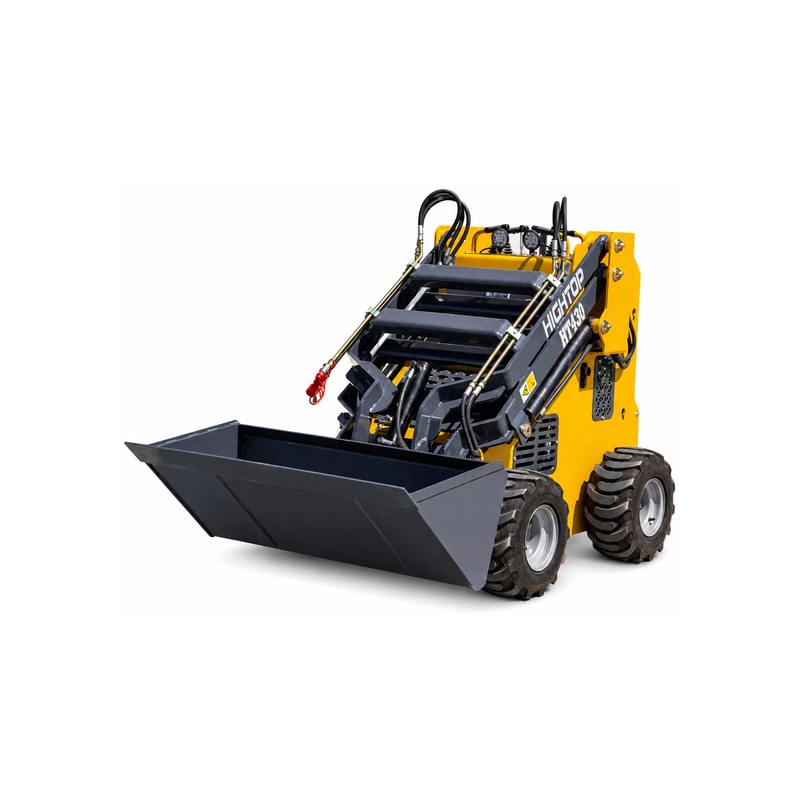
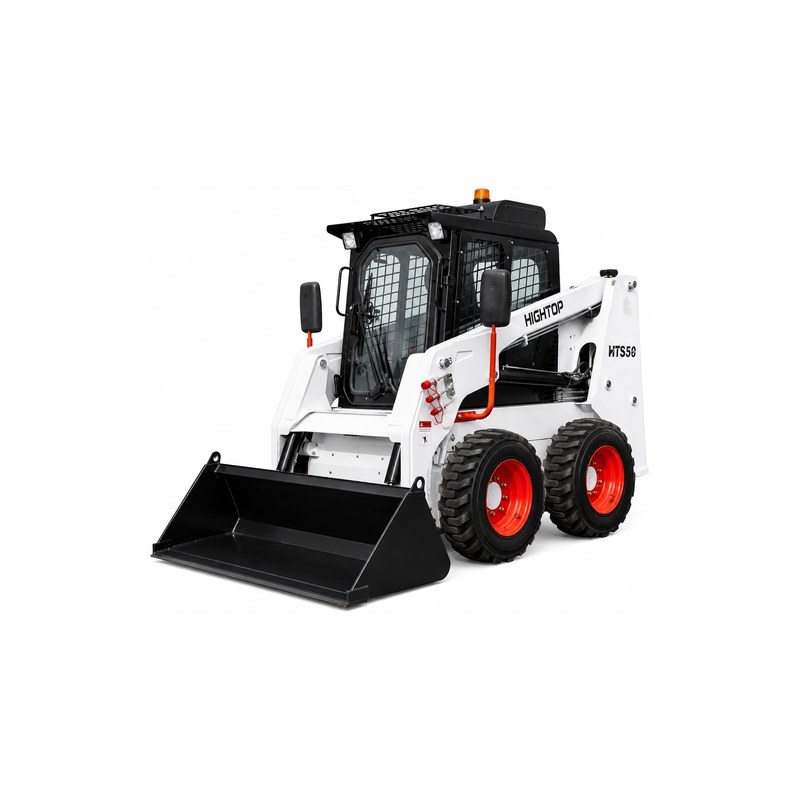
The HT430 Mini Wheel Skid Steer Loader has a rated carrying capacity of 430 kg, a 0.17 m³ bucket and a maximum working height of 2,400 mm. Its compact form is suited to smaller sites where repeated loading, surface preparation and attachment changes are required.
For greater material-handling demand, the HTS50 Skid Steer Loader provides a 750 kg rated working load, a 1,500 kg overturning load and a 0.35 m³ bucket. These specifications illustrate why loader selection should be based on actual load and lift requirements rather than the general term “skid steer.”
Efisiensi Pemuatan Tergantung pada Perjalanan
A mini excavator can lift and swing material, but it is not designed to carry bucket loads quickly over repeated distances. A skid steer can move continuously between a material pile and a loading point, making it more productive when travel forms a major part of the work cycle.
Mini Excavator vs Skid Steer di Ruang Ketat
Both machines are considered compact, but they use limited space differently.
A small excavator may have a narrow undercarriage and a rotating upper structure. It can remain in one position while working across part of its swing range. Adjustable tracks and a swing boom can improve access beside buildings or through narrow entrances.
A skid steer can turn within a very small area, but the whole machine changes direction during the turn. Space must be available for the bucket, lift arms, rear body and any material being carried.
Pintu Masuk Sempit
For gardens, indoor renovation areas, greenhouses or fenced properties, overall machine width may determine the choice before performance is considered.
Mingyang’s HT10B one-ton excavator has a chassis width of 896 mm and an adjustable track gauge of 830–1,000 mm. This allows the undercarriage to contract for narrow access and expand when a wider operating stance is required.
A mini skid steer may also enter relatively small spaces, but the machine’s widest fixed point and the selected attachment must be measured. Pallet forks, wide buckets and grapples may require considerably more clearance than the loader itself.
Bekerja Di Samping Dinding
A mini excavator with suitable boom geometry can dig parallel to a wall, foundation or fence. The operator must still check counterweight clearance and establish a safe swing area.
A skid steer can approach a wall directly and work efficiently in front of the machine, but side work usually requires the loader to turn or reposition.
Kondisi Tanah dan Kerusakan Permukaan
Undercarriage design has a major influence on traction, maneuverability and ground disturbance.
Mini Excavator Terlacak
A mini excavator generally uses crawler tracks that distribute the machine’s weight over a longer contact area. This can improve flotation on soil and provide a stable base for digging.
However, tracks can still damage finished lawns, paving edges and delicate surfaces, particularly during sharp turns. Operators should avoid assuming that rubber tracks prevent all surface disturbance.
Wheeled Skid Steer
A wheeled skid steer performs effectively on concrete, compacted gravel and other firm surfaces. Wheels allow faster travel and may simplify tire maintenance compared with a tracked loader.
Because the machine turns by skidding the wheels across the surface, repeated turning can disturb turf and loose soil. Tire selection must also match puncture risk, surface hardness and traction requirements.
Skid Steer Terlacak
A tracked skid steer offers better flotation and traction on loose, muddy or uneven ground than a wheeled version. It retains the loader’s material-handling function while expanding the range of workable surfaces.
The undercarriage is more complex, so track condition, rollers, tension and debris accumulation require regular attention.
| Ground condition | Mini ekskavator | Wheeled skid steer | Tracked skid steer |
|---|---|---|---|
| Concrete or pavement | Suitable with care | Strong choice | Usable but track wear must be considered |
| Firm gravel | Suitable | Strong choice | Strong choice |
| Soft soil | Generally suitable | May lose traction | Generally suitable |
| Muddy ground | Depends on track and site slope | More limited | Better than wheeled models |
| Finished lawn | Lower travel frequency helps | Skid turning can disturb turf | Can still mark turf during turns |
| Uneven excavation area | Stable digging platform when positioned correctly | Load must remain controlled | Good traction but not a substitute for safe positioning |
| Frequent long travel | Relatively slow | Most efficient | Moderate |
Slope, surface strength, obstacles and load position should always be assessed separately. No undercarriage makes a machine suitable for every terrain.
Keterbagunaan Lampiran
Both machines support multiple attachments, but their attachment systems and strongest applications differ.
Mini Excavator Attachment
Common compact excavator tools include:
- Digging buckets
- Narrow trenching buckets
- Grading buckets
- Hydraulic breakers
- Augers
- Rippers
- Grapples or thumbs
- Compaction tools
These attachments primarily extend digging, demolition and below-grade work. Attachment weight, hydraulic flow, operating pressure, pin size and machine stability must be checked before installation.
Lampiran Skid Steer
Common skid steer tools include:
- General-purpose buckets
- Grapple buckets
- Pallet forks
- Augers
- Sweepers
- Trenchers
- Brush cutters
- Snow blades
- Hydraulic breakers
- Soil-preparation tools
The front-mounted quick-coupler system makes the skid steer highly adaptable for above-ground and surface applications. The ISO earth-moving machinery catalogue includes requirements concerning loaders and the coupling of attachments to skid steer loaders.
Lampiran Tidak Dapat Dipertukarkan Secara Otomatis
An auger, breaker or grapple may be available for both machines, but that does not mean the same unit can be installed on both. Excavators normally use an arm-mounted pin or coupler system, while skid steers use a front attachment plate.
Hydraulic flow and pressure must also match. An attachment requiring high hydraulic flow may not perform correctly on a compact machine with a standard-flow circuit.
The attachment list should therefore be confirmed at the same time as the base machine configuration.
Penilaian dan Persiapan Lokasi
A skid steer is generally more efficient for spreading gravel, leveling loose material and performing repeated forward-and-reverse grading passes. Its bucket position and travel speed support surface preparation over a wider area.
A mini excavator can perform initial grading with its dozer blade and shape slopes with a grading bucket. It is often more precise around drainage channels, retaining walls and irregular edges, but it is slower for repeated material spreading.
Mesin Mana yang Lebih Baik untuk Jalan Masuk?
A skid steer is usually more suitable when the work involves moving aggregate, spreading material and completing repeated grading passes. A mini excavator becomes valuable when drainage channels, culverts, retaining features or soil removal must be completed before the driveway surface is prepared.
Mesin Mana yang Lebih Baik untuk Taman?
A mini excavator is generally preferable for planting holes, ponds, drainage, stump work and trenches. A compact skid steer is more efficient for moving soil, mulch, plants and landscape materials around an open site.
Transportasi dan Pergerakan Tempat Kerja
Transport planning must use the full machine configuration rather than nominal machine class.
Confirm:
- Actual operating and transport weight
- Overall length, width and height
- Trailer load rating
- Transport-vehicle capacity
- Weight of buckets and powered attachments
- Ramp capacity and loading angle
- Approved tie-down locations
- Local transport requirements
A one- or two-ton excavator may be relatively easy to transport between small projects, but larger attachments increase the total load. A skid steer’s bucket, forks or other tools also require secure transport space.
Once on site, the skid steer generally travels faster and is better suited to moving material over repeated distances. The excavator moves more slowly but can cover a broad digging area through its arm reach and upper-structure rotation without frequently relocating its tracks.
Perbedaan Pemeliharaan
The maintenance workload depends on machine size, operating hours, terrain and attachment use.
Pemeliharaan Mini Excavator
Important inspection areas include:
- Track tension and undercarriage wear
- Hydraulic hoses and fittings
- Boom, arm and bucket pins
- Slew system and swing components
- Bucket teeth and cutting edges
- Engine oil, coolant and filters
- Grease points
- Dozer blade condition
The machine often remains stationary while digging, but its boom linkage and hydraulic components experience repeated loading cycles.
Pemeliharaan Skid Steer
Important inspection areas include:
- Tire or track condition
- Lift arms and pivot points
- Hydraulic couplers and hoses
- Quick-attachment locking system
- Bucket and attachment wear
- Cooling system and air filters
- Drive components
- Operator-restraint and interlock systems
Skid turning creates tire or undercarriage wear, especially on abrasive surfaces. Frequent attachment changes also make coupler inspection essential.
OSHA-supported skid steer safety guidance identifies operator restraints, protective structures and control interlock systems as important safety features. Maintenance and attachment work should follow the machine manual, and raised components must be correctly supported before anyone enters a hazardous area.
Pertimbangan Keselamatan untuk Kedua Mesin
Compact dimensions do not make either machine harmless. Their hydraulic systems, attachments, blind spots and moving structures can cause serious hazards if work areas are not controlled.
Prioritas Keselamatan Mini Excavator
The excavator’s boom, bucket and rotating upper structure create a defined working and swing area. Workers should remain outside this area unless movement has stopped and communication with the operator is established.
The machine should be positioned on suitable ground, with the blade and tracks configured according to the operating manual. Loads must remain within the manufacturer’s limits.
Prioritas Keamanan Skid Steer
Operators should enter and exit using the designated procedure, keep loads low during travel and confirm that attachments are fully connected. No person should work beneath raised loader arms without approved support devices.
OSHA construction equipment requirements state that loader buckets and similar equipment must be fully lowered or properly blocked when being repaired or when not in use.
Mesin Mana yang Lebih Baik untuk Aplikasi Berbeda?
| Application | More suitable machine | Reason |
|---|---|---|
| Utility trenching | Mini ekskavator | Provides controlled depth and reach |
| Foundation excavation | Mini ekskavator | Designed for below-grade digging |
| Drainage installation | Mini ekskavator | Better trench alignment and bucket control |
| Loading loose material | Skid steer | Faster loading and carrying cycle |
| Pallet handling | Skid steer | Front forks and loader geometry suit the task |
| Driveway grading | Skid steer | Efficient repeated passes and material spreading |
| Landscape planting | Mini ekskavator | Precise holes and reduced repositioning |
| Moving mulch or soil | Skid steer | Efficient surface transport |
| Stump and root work | Mini ekskavator | Boom and attachment provide controlled pulling |
| Site cleanup | Skid steer | Bucket and sweeper attachments improve efficiency |
| Work beside walls | Mini ekskavator | Swing boom and rotating structure improve positioning |
| Snow removal | Skid steer | Suitable blade, bucket and snow attachments |
| Farm trench maintenance | Mini ekskavator | Better for drainage and irrigation work |
| Feed and material handling | Skid steer | Stronger lift-and-carry workflow |
This table indicates the machine type that normally has an advantage. Final selection still depends on machine size, configuration and actual operating conditions.
Kapan Masuk Akal Menggunakan Keduanya?
A mini excavator and a skid steer often complement each other rather than compete.
On a drainage project, the excavator can dig the trench and position pipes while the skid steer carries gravel, removes excess soil and backfills the completed section. During landscaping, the excavator can prepare planting areas while the loader moves soil, plants and surface materials.
Using both can improve production when:
- Excavation and material transport happen simultaneously
- The project covers a relatively large working area
- Significant soil or aggregate must be moved
- Different attachments are required throughout the day
- The schedule does not allow one machine to perform inefficient substitute work
For smaller or occasional projects, the better approach may be to choose the machine that covers the primary task and arrange the second machine only when required.
Cara Melakukan Seleksi Akhir
Before comparing specific models, estimate how the machine will spend its working hours.
Choose a mini excavator when most work involves:
- Trenching
- Menggali di bawah permukaan tanah
- Drainage and utility installation
- Small foundations
- Controlled demolition
- Stump and root removal
- Work beside existing structures
Choose a skid steer when most work involves:
- Loading trucks or dumpers
- Carrying loose material
- Pallet handling
- Surface grading
- Construction-site cleanup
- Snow clearing
- Frequent attachment changes
If the workload includes both categories, identify which tasks occur most frequently and which tasks create the greatest delay when performed by the wrong machine.
milik Mingyang Layanan mesin konstruksi OEM dan ODM include configurable engines, attachments, colors, branding and packaging. The intended application, destination market, attachment requirements and expected operating conditions should be confirmed before choosing a configuration.
FAQ
Apakah skid steer atau mini excavator lebih baik untuk menggali parit?
A mini excavator is normally better because its boom and arm are designed to reach below ground level while the upper structure rotates independently of the undercarriage. A skid steer can operate a trencher attachment or perform shallow scraping, but it does not provide the same general digging depth, reach and spoil-placement control.
Bisakah mini excavator memuat truk seperti skid steer?
A mini excavator can lift and swing material into a truck when its unloading height, bucket capacity and working range match the vehicle. However, it moves slowly when carrying material across a site. A skid steer is usually more efficient when repeated travel between a stockpile and loading point forms the main work cycle.
Mesin mana yang menyebabkan lebih sedikit kerusakan pada tanah jadi?
A tracked mini excavator often requires less site travel because it can dig and swing material from one position. A wheeled skid steer may disturb turf during skid turns. Ground damage still depends on machine weight, track or tire design, soil moisture, surface strength, turning technique and the number of passes made.
Bisakah mini excavator dan skid steer attachment dibagikan?
Usually not. Excavator attachments connect to the end of the arm through pins or a dedicated coupler, while skid steer tools normally use a front-mounted quick-attachment plate. Hydraulic flow, pressure, hose connections and attachment weight can also differ, so compatibility must be verified for each machine and tool.
Haruskah kontraktor memilih kedua mesin tersebut?
Both may be justified when digging and material handling occur regularly on the same projects. The excavator can trench, demolish and work below grade, while the skid steer loads, carries, grades and cleans the site. If one type of work is only occasional, selecting the primary machine and arranging the second when needed may be more practical.
Kesimpulan
The mini excavator vs skid steer decision becomes clearer when the main workflow is identified. A mini excavator is designed to dig down, reach outward and place material precisely while remaining relatively stationary. A skid steer is designed to push forward, lift upward and carry material efficiently across the site.
Neither machine is universally better. A mini excavator is the stronger choice for trenches, drainage, foundations and controlled excavation. A skid steer is more productive for loading, grading, pallet handling and frequent attachment-based surface work.
Machine width, operating weight, digging depth, rated load, hydraulic requirements, undercarriage design and transport conditions should all be compared before ordering. Matching these specifications to real working conditions provides a more reliable result than choosing equipment only because it is compact or can accept many attachments.