Tabla de contenidos
A mini excavator and a skid steer loader are both compact, hydraulically powered machines commonly used in construction, landscaping, agriculture and property maintenance. Their sizes and applications sometimes overlap, but their basic designs serve different purposes.
A mini excavator is built primarily for controlled digging below ground level. Its boom, arm, bucket and rotating upper structure provide depth, reach and precise material placement. A skid steer is designed primarily to lift, push, carry and load materials. Its front-mounted lift arms, compact wheelbase and quick attachment changes make it efficient for surface-level work.
This comparison explains:
- Which machine performs better for digging and trenching
- Which option is more efficient for loading and material transport
- How each machine works in narrow or restricted spaces
- How wheels and tracks affect different ground conditions
- Which attachments are suitable for each equipment type
- What to compare before selecting a machine or product range
- When using both machines may provide the best jobsite efficiency
What Is the Main Difference Between a Mini Excavator and a Skid Steer?
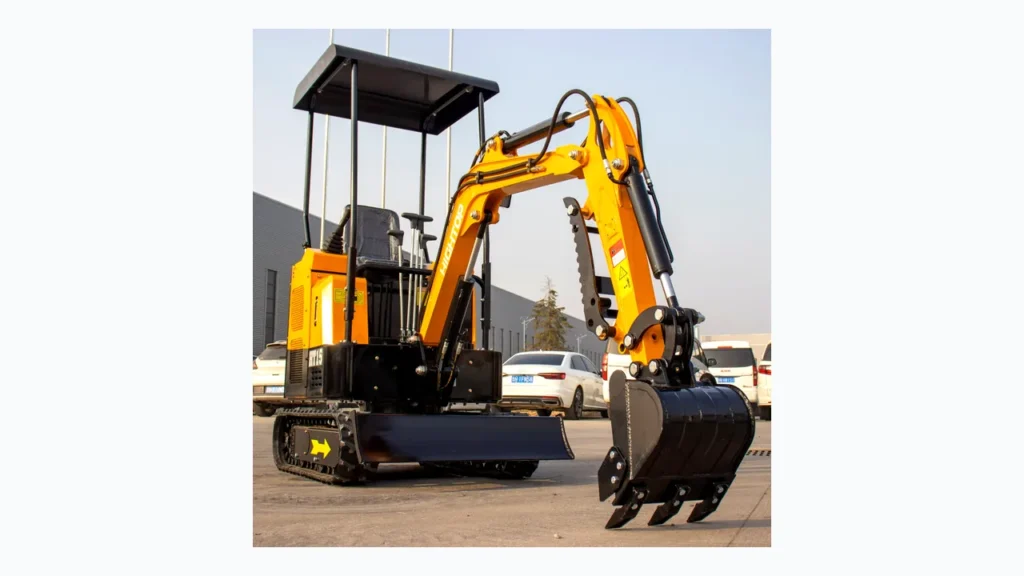
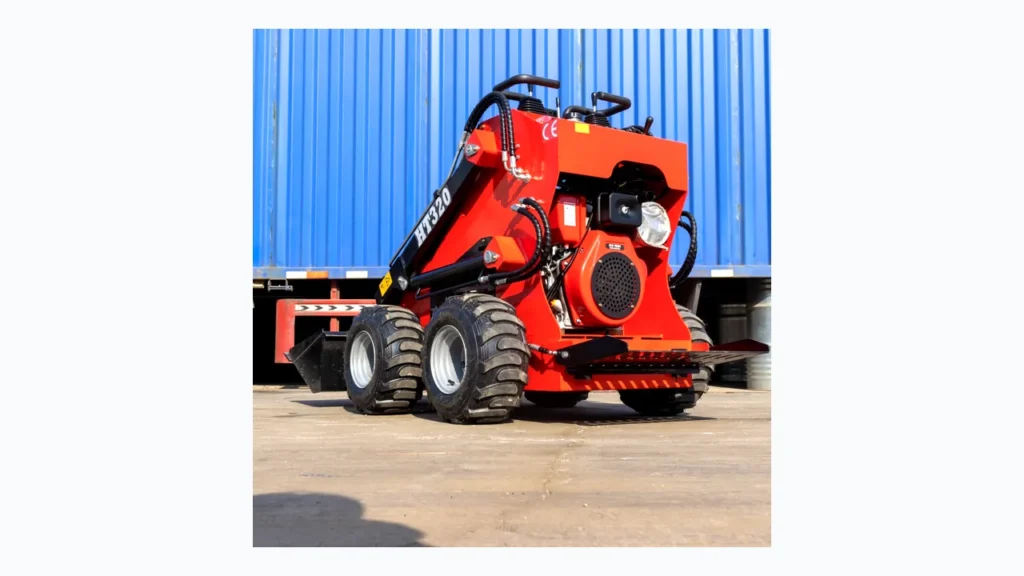
The main difference is the direction and type of work each machine is designed to perform.
A mini excavator uses an articulated boom and arm to dig below the level of its tracks. Its upper structure can rotate, allowing the operator to excavate from one position and place material beside or behind the machine.
A skid steer loader uses front lift arms to push into material, lift it and carry it across the site. It turns by driving its left and right wheels or tracks at different speeds, providing a very small turning radius.
In simple terms, a mini excavator specializes in digging and controlled reach, while a skid steer specializes in loading, carrying and surface preparation.
| Comparison area | Miniexcavadora | Skid steer loader |
|---|---|---|
| Función primaria | Digging below ground level | Loading and moving material |
| Working structure | Boom, arm and rotating upper body | Front lift arms and rigid chassis |
| Material movement | Digs and places material within its reach | Carries material across the jobsite |
| Turning method | Rotating upper structure and tracked travel | Differential wheel or track movement |
| Best-known strength | Digging depth and precision | Loading speed and attachment versatility |
| Typical applications | Trenches, drainage, foundations and demolition | Grading, loading, cleanup and pallet handling |
| Common undercarriage | Rubber or steel tracks | Wheels or crawler tracks |
| Work position | Often remains stationary while digging | Frequently travels between loading points |
The right decision therefore begins with the machine’s main daily task—not with the number of optional attachments offered.
Digging Performance: Mini Excavator Has the Advantage
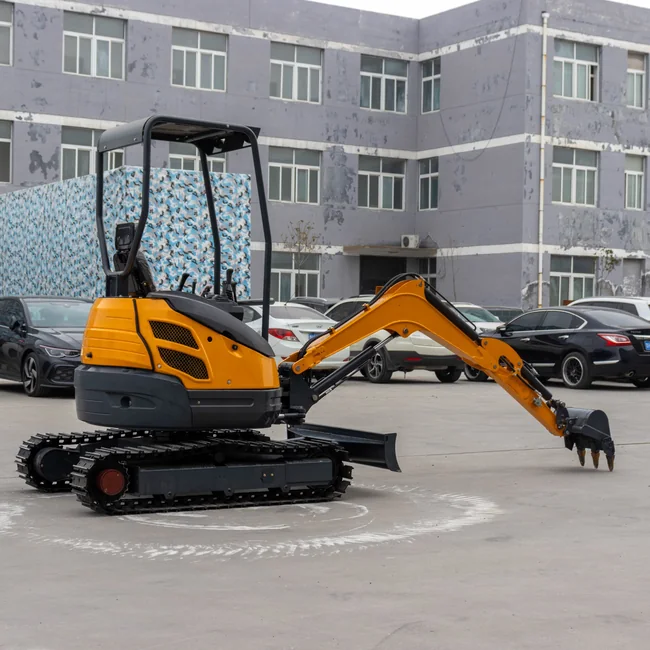
A mini excavator is specifically engineered to penetrate the ground, pull material toward the machine and discharge it at a controlled location. Boom length, arm geometry, bucket breakout force and hydraulic control determine its working range.
The rotating upper structure also allows the operator to dig a trench and place spoil along either side without repeatedly turning the entire undercarriage. This is particularly useful near walls, fences, roads and existing structures.
Mingyang gama miniexcavadora includes models from the one-ton class to larger compact machines. This makes it possible to compare access width, digging depth and hydraulic capability according to the project.
Zanjas y Drenaje
For water pipes, electrical conduits, irrigation systems and drainage channels, a mini excavator usually provides better depth control and trench alignment. Different bucket widths can be selected to reduce unnecessary soil removal.
Before excavation begins, underground utilities and surrounding soil conditions must be assessed. Applicable requirements such as OSHA’s specific excavation regulations should be considered alongside local safety rules.
Foundations and Landscaping
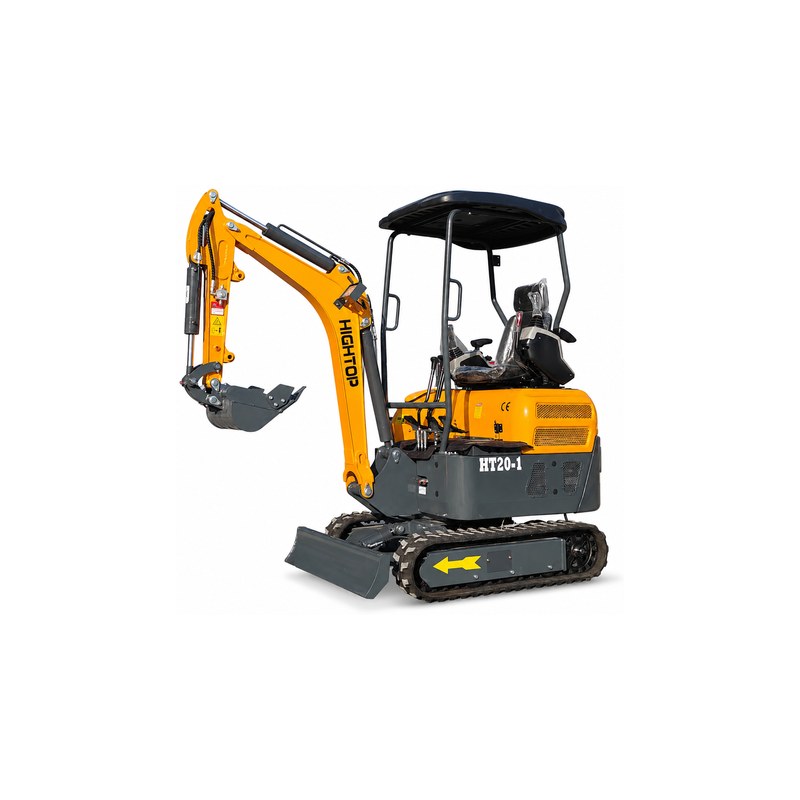
A compact excavator can prepare small footings, dig planting holes, remove soil and shape landscape features. A swing boom can provide additional flexibility when working beside a structure or following a narrow trench line.
For example, the HT20-1 2 Ton Hydraulic Mini Excavator combines a 2,000 kg operating weight, approximately 2,060 mm digging depth and interchangeable work-tool options. This configuration is intended for more substantial digging work than a surface-loading machine.
Can a Skid Steer Dig?
A skid steer can scrape loose soil, remove shallow layers and perform light excavation with a bucket. A trencher or backhoe attachment may extend its capability, but it does not turn the loader into a full mini excavator.
The loader’s lift-arm geometry remains optimized for pushing and lifting rather than reaching down into a trench. If regular work requires controlled depth, vertical trench walls or excavation close to obstacles, the mini excavator is normally the more appropriate platform.
Loading and Carrying: Skid Steer Has the Advantage
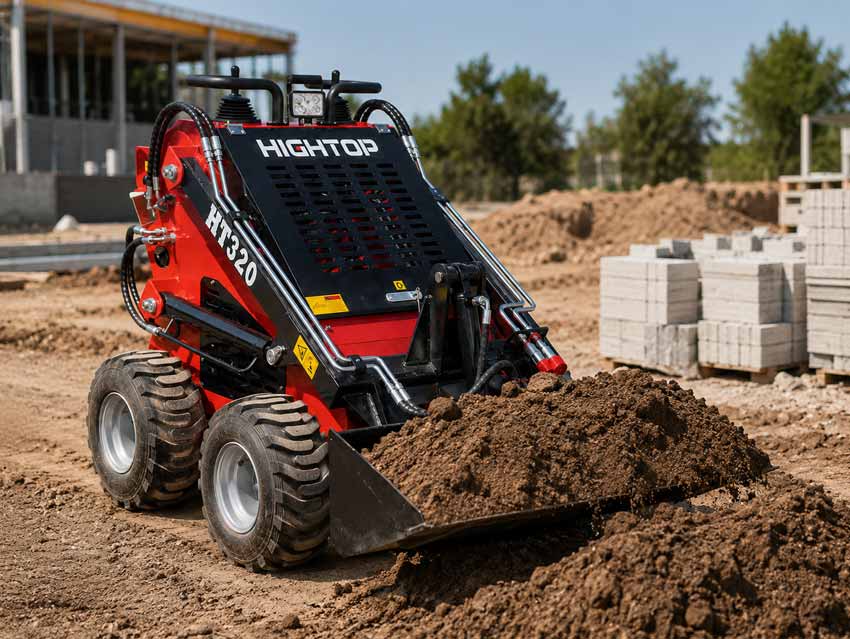
A skid steer is more efficient when the main task is moving loose material repeatedly across a site. Its bucket is positioned in front of the machine, allowing the operator to drive into a stockpile, lift the load, travel to another point and discharge it.
This operating pattern is well suited to:
- Loading soil, gravel, sand or debris
- Moving materials between work areas
- Loading small trucks or dumpers
- Grading driveways and work surfaces
- Carrying pallets with fork attachments
- Cleaning construction and agricultural sites
- Pushing snow or loose material
- Handling feed, fertilizer or other farm materials
El Mingyang skid loader range includes compact models intended for construction, landscaping, farm and municipal applications.
Compact Material Handling
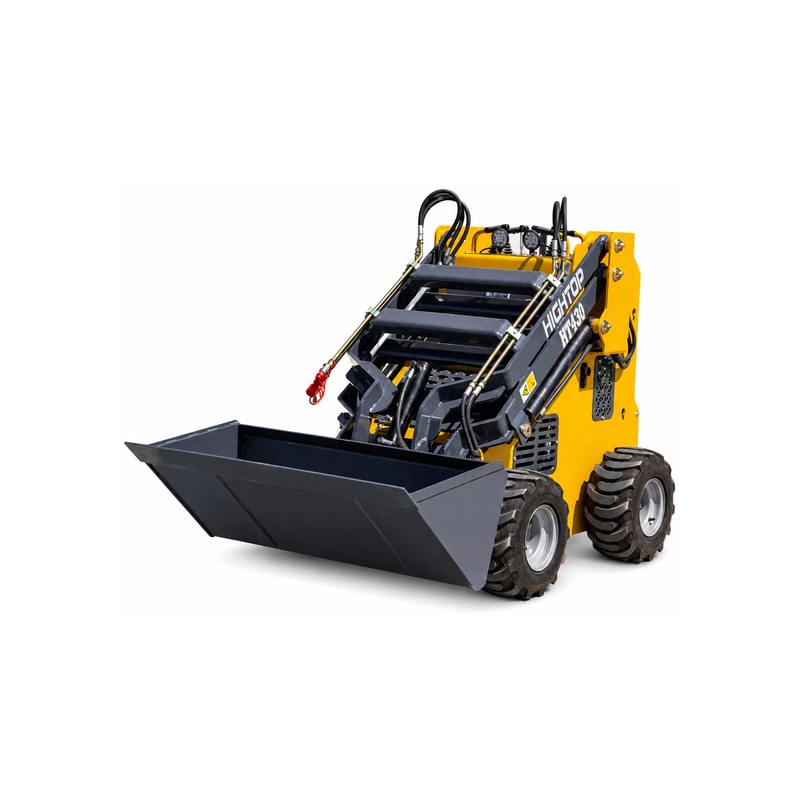
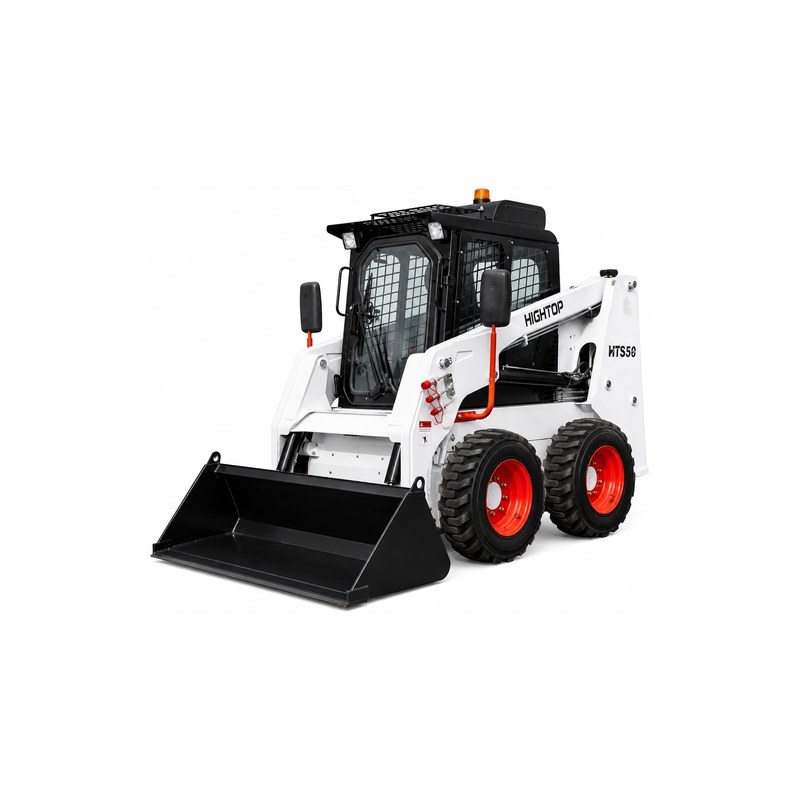
El HT430 Mini Wheel Skid Steer Loader has a rated carrying capacity of 430 kg, a 0.17 m³ bucket and a maximum working height of 2,400 mm. Its compact form is suited to smaller sites where repeated loading, surface preparation and attachment changes are required.
For greater material-handling demand, the minicargador HTS50 provides a 750 kg rated working load, a 1,500 kg overturning load and a 0.35 m³ bucket. These specifications illustrate why loader selection should be based on actual load and lift requirements rather than the general term “skid steer.”
Loading Efficiency Depends on Travel
A mini excavator can lift and swing material, but it is not designed to carry bucket loads quickly over repeated distances. A skid steer can move continuously between a material pile and a loading point, making it more productive when travel forms a major part of the work cycle.
Mini Excavator vs Skid Steer in Tight Spaces
Both machines are considered compact, but they use limited space differently.
A small excavator may have a narrow undercarriage and a rotating upper structure. It can remain in one position while working across part of its swing range. Adjustable tracks and a swing boom can improve access beside buildings or through narrow entrances.
A skid steer can turn within a very small area, but the whole machine changes direction during the turn. Space must be available for the bucket, lift arms, rear body and any material being carried.
Narrow Entrances
For gardens, indoor renovation areas, greenhouses or fenced properties, overall machine width may determine the choice before performance is considered.
Mingyang’s HT10B one-ton excavator has a chassis width of 896 mm and an adjustable track gauge of 830–1,000 mm. This allows the undercarriage to contract for narrow access and expand when a wider operating stance is required.
A mini skid steer may also enter relatively small spaces, but the machine’s widest fixed point and the selected attachment must be measured. Pallet forks, wide buckets and grapples may require considerably more clearance than the loader itself.
Working Beside Walls
A mini excavator with suitable boom geometry can dig parallel to a wall, foundation or fence. The operator must still check counterweight clearance and establish a safe swing area.
A skid steer can approach a wall directly and work efficiently in front of the machine, but side work usually requires the loader to turn or reposition.
Ground Conditions and Surface Damage
Undercarriage design has a major influence on traction, maneuverability and ground disturbance.
Tracked Mini Excavator
A mini excavator generally uses crawler tracks that distribute the machine’s weight over a longer contact area. This can improve flotation on soil and provide a stable base for digging.
However, tracks can still damage finished lawns, paving edges and delicate surfaces, particularly during sharp turns. Operators should avoid assuming that rubber tracks prevent all surface disturbance.
Wheeled Skid Steer
A wheeled skid steer performs effectively on concrete, compacted gravel and other firm surfaces. Wheels allow faster travel and may simplify tire maintenance compared with a tracked loader.
Because the machine turns by skidding the wheels across the surface, repeated turning can disturb turf and loose soil. Tire selection must also match puncture risk, surface hardness and traction requirements.
Tracked Skid Steer
A tracked skid steer offers better flotation and traction on loose, muddy or uneven ground than a wheeled version. It retains the loader’s material-handling function while expanding the range of workable surfaces.
The undercarriage is more complex, so track condition, rollers, tension and debris accumulation require regular attention.
| Ground condition | Miniexcavadora | Wheeled skid steer | Tracked skid steer |
|---|---|---|---|
| Concrete or pavement | Suitable with care | Strong choice | Usable but track wear must be considered |
| Firm gravel | Suitable | Strong choice | Strong choice |
| Soft soil | Generally suitable | May lose traction | Generally suitable |
| Muddy ground | Depends on track and site slope | More limited | Better than wheeled models |
| Finished lawn | Lower travel frequency helps | Skid turning can disturb turf | Can still mark turf during turns |
| Uneven excavation area | Stable digging platform when positioned correctly | Load must remain controlled | Good traction but not a substitute for safe positioning |
| Frequent long travel | Relatively slow | Most efficient | Moderate |
Slope, surface strength, obstacles and load position should always be assessed separately. No undercarriage makes a machine suitable for every terrain.
Attachment Versatility
Both machines support multiple attachments, but their attachment systems and strongest applications differ.
Mini Excavator Attachments
Common compact excavator tools include:
- Digging buckets
- Narrow trenching buckets
- Grading buckets
- Hydraulic breakers
- Barrenas
- Rippers
- Grapples or thumbs
- Compaction tools
These attachments primarily extend digging, demolition and below-grade work. Attachment weight, hydraulic flow, operating pressure, pin size and machine stability must be checked before installation.
Skid Steer Attachments
Common skid steer tools include:
- General-purpose buckets
- Grapple buckets
- Pallet forks
- Barrenas
- Sweepers
- Trenchers
- Brush cutters
- Snow blades
- Hydraulic breakers
- Soil-preparation tools
The front-mounted quick-coupler system makes the skid steer highly adaptable for above-ground and surface applications. The ISO earth-moving machinery catalogue includes requirements concerning loaders and the coupling of attachments to skid steer loaders.
Attachments Are Not Automatically Interchangeable
An auger, breaker or grapple may be available for both machines, but that does not mean the same unit can be installed on both. Excavators normally use an arm-mounted pin or coupler system, while skid steers use a front attachment plate.
Hydraulic flow and pressure must also match. An attachment requiring high hydraulic flow may not perform correctly on a compact machine with a standard-flow circuit.
The attachment list should therefore be confirmed at the same time as the base machine configuration.
Grading and Site Preparation
A skid steer is generally more efficient for spreading gravel, leveling loose material and performing repeated forward-and-reverse grading passes. Its bucket position and travel speed support surface preparation over a wider area.
A mini excavator can perform initial grading with its dozer blade and shape slopes with a grading bucket. It is often more precise around drainage channels, retaining walls and irregular edges, but it is slower for repeated material spreading.
Which Machine Is Better for a Driveway?
A skid steer is usually more suitable when the work involves moving aggregate, spreading material and completing repeated grading passes. A mini excavator becomes valuable when drainage channels, culverts, retaining features or soil removal must be completed before the driveway surface is prepared.
Which Machine Is Better for a Garden?
A mini excavator is generally preferable for planting holes, ponds, drainage, stump work and trenches. A compact skid steer is more efficient for moving soil, mulch, plants and landscape materials around an open site.
Transport and Jobsite Movement
Transport planning must use the full machine configuration rather than nominal machine class.
Confirm:
- Actual operating and transport weight
- Overall length, width and height
- Trailer load rating
- Transport-vehicle capacity
- Weight of buckets and powered attachments
- Capacidad de rampa y ángulo de carga
- Approved tie-down locations
- Local transport requirements
A one- or two-ton excavator may be relatively easy to transport between small projects, but larger attachments increase the total load. A skid steer’s bucket, forks or other tools also require secure transport space.
Once on site, the skid steer generally travels faster and is better suited to moving material over repeated distances. The excavator moves more slowly but can cover a broad digging area through its arm reach and upper-structure rotation without frequently relocating its tracks.
Maintenance Differences
The maintenance workload depends on machine size, operating hours, terrain and attachment use.
Mini Excavator Maintenance
Important inspection areas include:
- Track tension and undercarriage wear
- Hydraulic hoses and fittings
- Boom, arm and bucket pins
- Slew system and swing components
- Bucket teeth and cutting edges
- Engine oil, coolant and filters
- Grease points
- Dozer blade condition
The machine often remains stationary while digging, but its boom linkage and hydraulic components experience repeated loading cycles.
Skid Steer Maintenance
Important inspection areas include:
- Tire or track condition
- Lift arms and pivot points
- Hydraulic couplers and hoses
- Quick-attachment locking system
- Bucket and attachment wear
- Cooling system and air filters
- Drive components
- Operator-restraint and interlock systems
Skid turning creates tire or undercarriage wear, especially on abrasive surfaces. Frequent attachment changes also make coupler inspection essential.
OSHA-supported skid steer safety guidance identifies operator restraints, protective structures and control interlock systems as important safety features. Maintenance and attachment work should follow the machine manual, and raised components must be correctly supported before anyone enters a hazardous area.
Safety Considerations for Both Machines
Compact dimensions do not make either machine harmless. Their hydraulic systems, attachments, blind spots and moving structures can cause serious hazards if work areas are not controlled.
Mini Excavator Safety Priorities
The excavator’s boom, bucket and rotating upper structure create a defined working and swing area. Workers should remain outside this area unless movement has stopped and communication with the operator is established.
The machine should be positioned on suitable ground, with the blade and tracks configured according to the operating manual. Loads must remain within the manufacturer’s limits.
Skid Steer Safety Priorities
Operators should enter and exit using the designated procedure, keep loads low during travel and confirm that attachments are fully connected. No person should work beneath raised loader arms without approved support devices.
OSHA construction equipment requirements state that loader buckets and similar equipment must be fully lowered or properly blocked when being repaired or when not in use.
Which Machine Is Better for Different Applications?
| Application | More suitable machine | Reason |
|---|---|---|
| Utility trenching | Miniexcavadora | Provides controlled depth and reach |
| Foundation excavation | Miniexcavadora | Designed for below-grade digging |
| Drainage installation | Miniexcavadora | Better trench alignment and bucket control |
| Loading loose material | Skid steer | Faster loading and carrying cycle |
| Pallet handling | Skid steer | Front forks and loader geometry suit the task |
| Driveway grading | Skid steer | Efficient repeated passes and material spreading |
| Landscape planting | Miniexcavadora | Precise holes and reduced repositioning |
| Moving mulch or soil | Skid steer | Efficient surface transport |
| Stump and root work | Miniexcavadora | Boom and attachment provide controlled pulling |
| Site cleanup | Skid steer | Bucket and sweeper attachments improve efficiency |
| Work beside walls | Miniexcavadora | Swing boom and rotating structure improve positioning |
| Snow removal | Skid steer | Suitable blade, bucket and snow attachments |
| Farm trench maintenance | Miniexcavadora | Better for drainage and irrigation work |
| Feed and material handling | Skid steer | Stronger lift-and-carry workflow |
This table indicates the machine type that normally has an advantage. Final selection still depends on machine size, configuration and actual operating conditions.
When Does It Make Sense to Use Both?
A mini excavator and a skid steer often complement each other rather than compete.
On a drainage project, the excavator can dig the trench and position pipes while the skid steer carries gravel, removes excess soil and backfills the completed section. During landscaping, the excavator can prepare planting areas while the loader moves soil, plants and surface materials.
Using both can improve production when:
- Excavation and material transport happen simultaneously
- The project covers a relatively large working area
- Significant soil or aggregate must be moved
- Different attachments are required throughout the day
- The schedule does not allow one machine to perform inefficient substitute work
For smaller or occasional projects, the better approach may be to choose the machine that covers the primary task and arrange the second machine only when required.
How to Make the Final Selection
Before comparing specific models, estimate how the machine will spend its working hours.
Choose a mini excavator when most work involves:
- Trenching
- Digging below ground level
- Drainage and utility installation
- Small foundations
- Controlled demolition
- Stump and root removal
- Work beside existing structures
Choose a skid steer when most work involves:
- Loading trucks or dumpers
- Carrying loose material
- Pallet handling
- Surface grading
- Construction-site cleanup
- Snow clearing
- Frequent attachment changes
If the workload includes both categories, identify which tasks occur most frequently and which tasks create the greatest delay when performed by the wrong machine.
Mingyang Servicios de maquinaria de construcción OEM y ODM include configurable engines, attachments, colors, branding and packaging. The intended application, destination market, attachment requirements and expected operating conditions should be confirmed before choosing a configuration.
Preguntas frecuentes
Is a skid steer or mini excavator better for digging trenches?
A mini excavator is normally better because its boom and arm are designed to reach below ground level while the upper structure rotates independently of the undercarriage. A skid steer can operate a trencher attachment or perform shallow scraping, but it does not provide the same general digging depth, reach and spoil-placement control.
Can a mini excavator load a truck like a skid steer?
A mini excavator can lift and swing material into a truck when its unloading height, bucket capacity and working range match the vehicle. However, it moves slowly when carrying material across a site. A skid steer is usually more efficient when repeated travel between a stockpile and loading point forms the main work cycle.
Which machine causes less damage to finished ground?
A tracked mini excavator often requires less site travel because it can dig and swing material from one position. A wheeled skid steer may disturb turf during skid turns. Ground damage still depends on machine weight, track or tire design, soil moisture, surface strength, turning technique and the number of passes made.
Can mini excavator and skid steer attachments be shared?
Usually not. Excavator attachments connect to the end of the arm through pins or a dedicated coupler, while skid steer tools normally use a front-mounted quick-attachment plate. Hydraulic flow, pressure, hose connections and attachment weight can also differ, so compatibility must be verified for each machine and tool.
Should a contractor choose both machines?
Both may be justified when digging and material handling occur regularly on the same projects. The excavator can trench, demolish and work below grade, while the skid steer loads, carries, grades and cleans the site. If one type of work is only occasional, selecting the primary machine and arranging the second when needed may be more practical.
Conclusión
The mini excavator vs skid steer decision becomes clearer when the main workflow is identified. A mini excavator is designed to dig down, reach outward and place material precisely while remaining relatively stationary. A skid steer is designed to push forward, lift upward and carry material efficiently across the site.
Neither machine is universally better. A mini excavator is the stronger choice for trenches, drainage, foundations and controlled excavation. A skid steer is more productive for loading, grading, pallet handling and frequent attachment-based surface work.
Machine width, operating weight, digging depth, rated load, hydraulic requirements, undercarriage design and transport conditions should all be compared before ordering. Matching these specifications to real working conditions provides a more reliable result than choosing equipment only because it is compact or can accept many attachments.