جدول المحتويات
Choosing the right mini excavator is not simply a matter of comparing machine weight or engine power. A compact model that performs efficiently in a residential yard may be too small for continuous trenching, while a heavier excavator may create unnecessary transport costs or access problems on confined jobsites.
For contractors, rental companies, landscaping businesses, agricultural operators and machinery dealers, the better approach is to match the excavator to the actual work it needs to perform. Digging depth, access width, terrain, hydraulic performance, attachment requirements, transport limits and expected daily workload all influence the final choice.
Modern excavators use hydraulic systems to control digging, lifting and attachment functions, allowing compact machines to perform far more tasks than simple earth excavation. For buyers considering smaller equipment, Mingyang’s range of mini excavators covers several operating sizes for landscaping, agriculture, utility work and construction applications.
What Size Mini Excavator Do You Need?
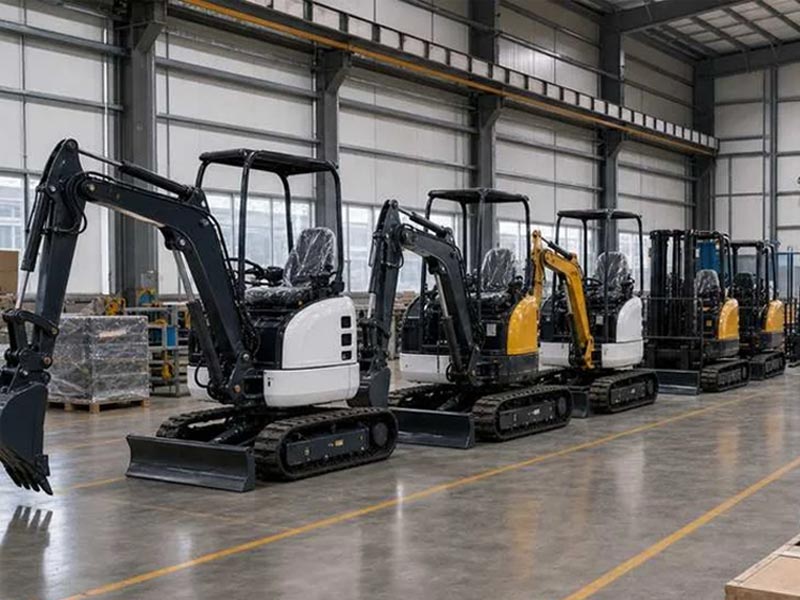
Mini excavator size is usually one of the first decisions buyers make, but operating weight alone should not determine the choice. A useful machine must combine sufficient digging capability with suitable access, stability and transportability.
Smaller 1-ton to 1.5-ton machines are often selected for gardens, farms, residential construction, narrow pathways and other areas where access is limited. Medium compact excavators around 2 to 3.5 tons provide additional digging depth, lifting capacity and stability for more demanding construction and utility work.
A simple starting point is to match machine size with project conditions:
| Typical Application | Suitable Size Range | Main Reason |
|---|---|---|
| Gardens and residential yards | 1–1.5 tons | Easy access and maneuverability |
| المناظر الطبيعية | 1–2 tons | Compact dimensions with useful digging capacity |
| Farm and orchard work | 1.3–2.5 tons | Versatility across different tasks |
| Utility trenching | 1.5–3.5 tons | Greater digging depth and stability |
| Small construction projects | 2–3.5 tons | Higher productivity and lifting ability |
| Confined indoor or narrow access work | Around 1 ton | Reduced machine width and footprint |
These ranges are practical starting points rather than universal rules. Soil conditions, required depth, attachment weight and working space can change the appropriate machine size.
For particularly narrow jobsites, the HT10B 1 Ton Mini Excavator is designed around compact access. Its adjustable 830–1,000 mm track gauge and maximum digging depth of 1,650 mm make it relevant for gardens, trenches, farms and small construction areas where space is limited.
Start With the Work, Not the Machine
A common buying mistake is choosing an excavator first and deciding how to use it afterward.
Instead, list the actual jobs the machine will perform during most of its working life.
A landscaping contractor may need to dig planting holes, prepare drainage trenches, remove small roots, move soil and grade surfaces. A farm operator may require irrigation trenching, orchard maintenance and small earthmoving jobs. A contractor may prioritize foundations, utilities and continuous excavation.
The same mini excavator will not be equally efficient in every scenario.
Before comparing models, ask:
- What material will normally be excavated?
- How deep and wide must the machine dig?
- How narrow is the jobsite entrance?
- Will the machine work mainly on firm or soft ground?
- Will attachments be used frequently?
- How often will the excavator move between jobsites?
- How many hours will it operate per day?
The answers create a much more useful specification than simply saying, “I need a small excavator.”
Digging Depth Is More Important Than Many Buyers Expect
Operating weight receives considerable attention during equipment selection, but digging depth often determines whether the excavator can actually complete the required work.
Consider drainage projects as an example. If the required trench depth approaches the machine’s maximum digging capability, the operator may need to reposition frequently or work at inefficient boom angles. A slightly larger excavator with additional working range can sometimes finish the same project faster.
Buyers should therefore compare:
Maximum digging depth: How deep can the bucket reach below ground level?
Maximum digging radius: How far can the machine work without repositioning?
Dumping height: Can excavated material be loaded efficiently into the intended truck or dumper?
Vertical digging capability: Is the geometry appropriate for trenches, foundations or walls?
The goal is not necessarily to buy the excavator with the greatest possible reach. The goal is to maintain enough working reserve for normal projects.
Consider Width, Tail Swing and Jobsite Access
Compact excavators are often purchased specifically because larger machinery cannot reach the work area.
That means overall width can be just as important as engine output.
Before ordering a machine, measure:
- Gate openings
- Building entrances
- Pathway width
- Distance between landscaping features
- Clearance beside walls
- Trailer dimensions
A machine that is technically powerful enough for the work can still become impractical if it cannot reach the jobsite.
Adjustable tracks can be particularly useful because they allow the undercarriage to narrow for access and expand again to improve stability during operation.
Tail swing also matters. On unrestricted sites, conventional tail swing may not create a problem. Near buildings, fences, roads or other machines, however, compact tail movement can make operation significantly easier.
This is one reason mini excavators are widely used in residential landscaping, municipal projects and confined construction areas.
Match the Excavator to Ground Conditions
Jobsite terrain strongly affects excavator selection.
A machine working on stable, level construction ground faces different demands from one operating in orchards, muddy farmland or uneven landscaping areas.
Tracked excavators typically provide good traction and distribute machine weight across a wider contact area. Nevertheless, buyers should still consider track width, ground clearance, undercarriage stability and machine balance.
On soft ground, a heavier machine may provide useful digging force but could also create more surface disturbance. On slopes or uneven terrain, stability becomes more important than simply selecting the smallest machine available.
The operator should also assess how much traveling the machine will perform during a normal workday. Excavators designed primarily for digging may spend relatively little time traveling, but farm, landscaping and municipal work can involve regular repositioning.
Choose Enough Engine and Hydraulic Performance
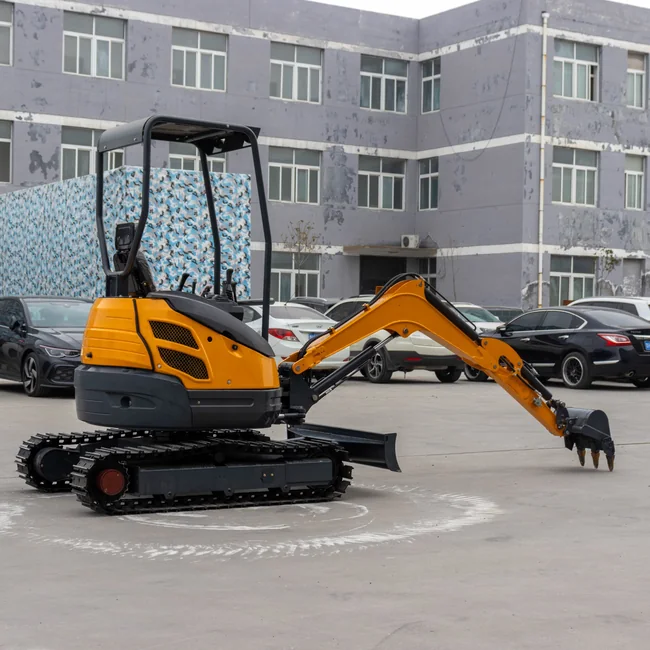
Engine power matters, but buyers should avoid judging mini excavators by horsepower alone.
Much of an excavator’s practical performance depends on how effectively the engine, hydraulic pump, valves, motors and cylinders work together.
Hydraulic performance affects:
- Bucket digging movement
- Boom and arm response
- Swing operation
- Travel
- Blade operation
- Hydraulic attachments
This becomes especially important when operating augers, breakers or other hydraulically driven tools.
A larger engine paired with an inefficient hydraulic system does not automatically produce a better working machine. Likewise, the most powerful model may increase fuel consumption without adding meaningful productivity to a light-duty application.
The better question is:
Does the machine provide sufficient hydraulic performance for the required bucket and attachments under normal workload?
Think About Attachments Before You Buy
One of the biggest advantages of compact excavators is their ability to perform multiple jobs with different attachments.
According to the general technical overview of hydraulic excavators, excavators can operate equipment such as breakers, grapples, augers, cutters and other hydraulic attachments in addition to standard buckets.
Depending on the project, useful attachments may include:
- Digging buckets
- Narrow trenching buckets
- Grading buckets
- Hydraulic breakers
- Augers
- Grapples
- Rippers
- Quick couplers
Attachment planning should happen before the excavator is ordered.
For example, if a customer expects to use a hydraulic breaker regularly, the machine must provide a suitable hydraulic circuit and sufficient stability. An auger may require different flow requirements. Larger attachments also change machine balance and lifting behavior.
For dealers and rental businesses, attachment compatibility can increase equipment utilization because one machine can serve several customer groups.
Compare 1-Ton, 2-Ton and 3.5-Ton Excavators Differently
There is no single “best” mini excavator size.
Each class solves different operating problems.
Around 1 Ton
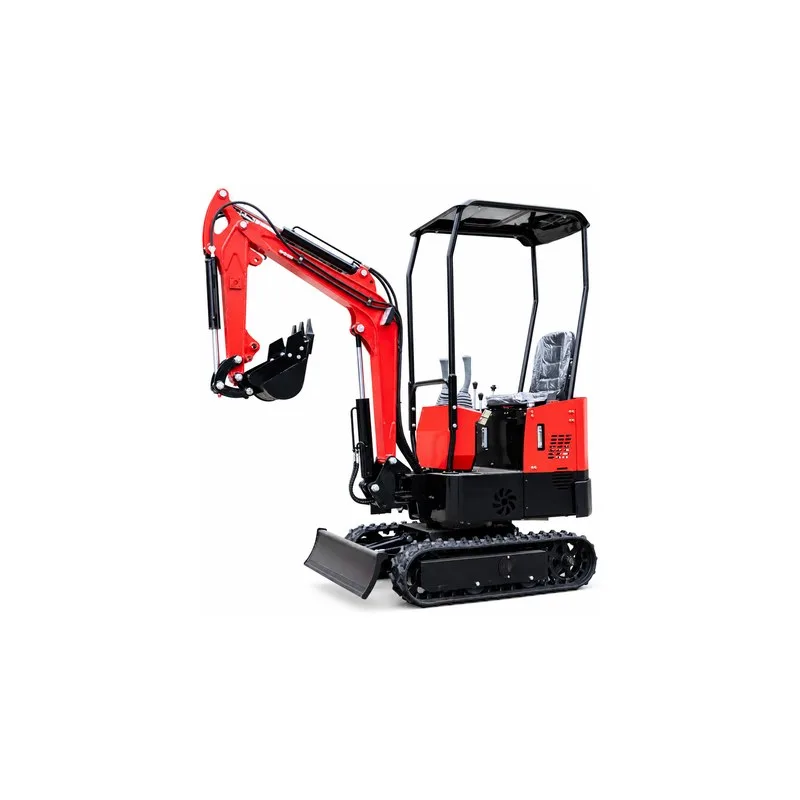
A 1-ton excavator prioritizes access, low transport weight and maneuverability.
It makes sense for:
- Residential landscaping
- Small gardens
- Narrow trenches
- Indoor or courtyard access
- Light farm maintenance
- Contractors frequently transporting equipment
Mingyang’s HT10B 1 Ton Mini Excavator is one example intended for tight operating areas.
Around 1.5–2 Tons
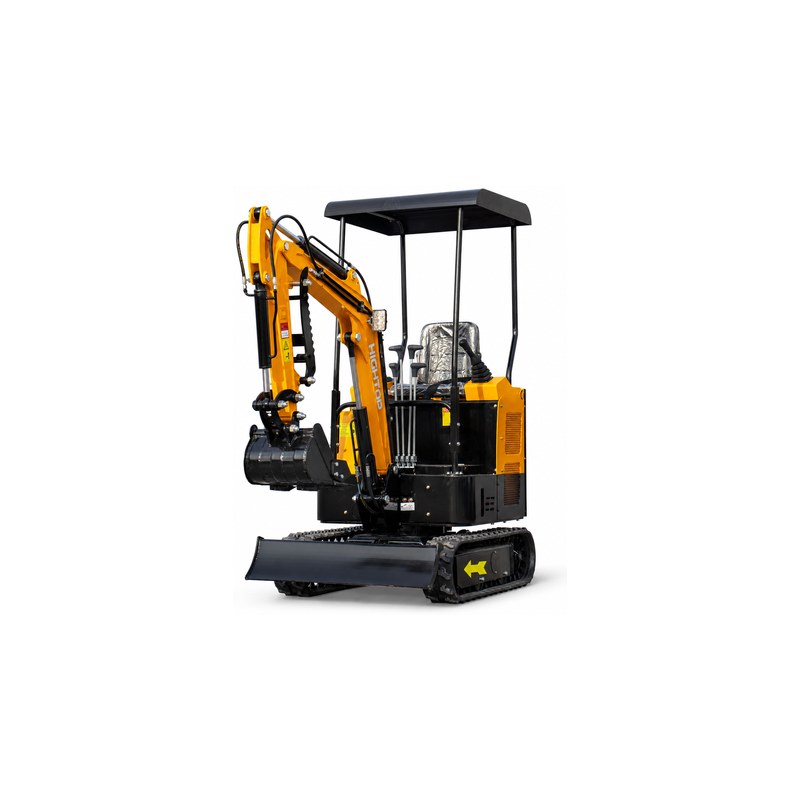
This range provides a useful balance between compact dimensions and stronger working capacity.
ال HT15 1.5 Ton Mini Excavator is positioned for farm and similar compact-machine applications, while Mingyang also offers 2-ton models for buyers needing more capability.
This class is often suitable for:
- Farms
- المناظر الطبيعية
- Drainage
- Utilities
- Small construction
- Rental fleets
Around 3–3.5 Tons
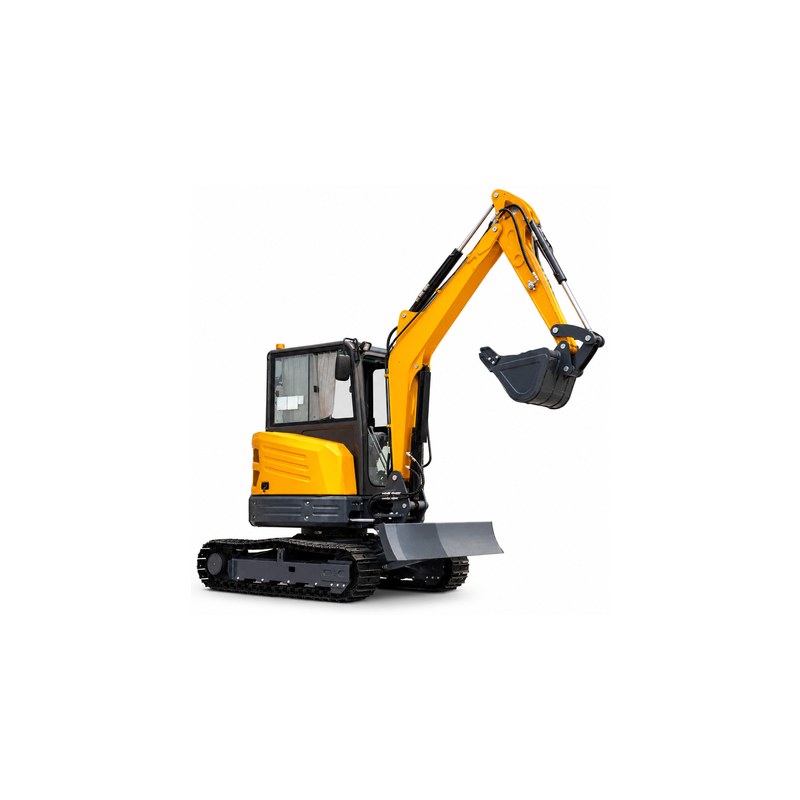
A larger compact excavator generally offers greater stability, working range and productive capacity.
It may be more appropriate when the machine will spend most of its time on construction or utility projects rather than passing through very narrow access points.
The trade-off is increased transport weight, greater space requirements and potentially higher operating costs.
Do Not Ignore Transport Requirements
A mini excavator rarely stays in one place permanently.
For contractors, landscapers and rental companies, transportation can affect the real cost of ownership almost as much as machine performance.
Before selecting a model, consider:
- Machine operating weight
- Trailer capacity
- Tow vehicle limits
- Attachment weight
- Transport width and height
- Local road regulations
- Loading and unloading procedures
A larger excavator may complete certain jobs faster but require more expensive transportation. Conversely, a compact machine may move easily between projects but need additional working time on heavier excavation.
The correct choice is the machine that offers the lowest practical total project cost, not necessarily the lowest purchase price.
Safety Should Be Part of Equipment Selection
Excavator selection cannot be separated from safe jobsite operation.
Trenching is a common mini excavator application, but excavation work introduces risks that go far beyond machine operation. The U.S. Occupational Safety and Health Administration’s trenching and excavation guidance identifies cave-ins as one of the major hazards and emphasizes appropriate protective systems, access, inspections and hazard control.
OSHA also notes that heavy equipment can create struck-by and falling-load hazards near excavations. Its construction trenching guidance recommends pre-job planning and evaluation of soil, utilities, water conditions, traffic and nearby structures before excavation begins.
For equipment buyers, this means choosing a suitable excavator is only one part of safe operation. Projects also require trained operators, appropriate site planning and compliance with applicable local regulations.
Machine stability, visibility, control response and maintenance condition should therefore be treated as purchasing considerations rather than secondary issues.
Evaluate Maintenance and Spare Parts Support
A mini excavator creates value while it is working. Downtime quickly reduces that value.
Buyers should therefore look beyond the initial specification sheet and evaluate routine service requirements.
Important questions include:
- Are daily inspection points easy to reach?
- How difficult is routine engine maintenance?
- Are hydraulic filters and service parts available?
- Can wear parts be identified quickly?
- Is technical documentation provided?
- What support is available after delivery?
This becomes particularly important for importers and equipment dealers who may operate hundreds or thousands of kilometers away from the original factory.
Mingyang provides construction machinery after-sales support covering equipment selection, spare parts, operation guidance, maintenance communication and long-term technical support for global buyers.
For rental fleets and distributors, this support can influence long-term machine availability and customer satisfaction.
New Buyers Should Calculate Total Cost, Not Price Alone
A low purchase price can be attractive, but purchase price is only one component of equipment cost.
A useful mini excavator buying comparison should consider:
| Cost Factor | لماذا يهم |
| Purchase price | Initial investment |
| Fuel consumption | Ongoing operating expense |
| Routine maintenance | Long-term ownership cost |
| Spare parts | Influences downtime and repair cost |
| Transportation | Important for mobile contractors |
| Attachments | Determines machine versatility |
| Productivity | Affects labor and project time |
| Resale potential | Influences lifetime equipment value |
A machine that costs slightly more initially may be the better commercial choice if it improves productivity, uses common service parts or supports several attachments.
For dealers, another factor is market fit. A 1-ton excavator may sell very well in regions dominated by residential landscaping, while a 2–3.5-ton model may be more attractive to contractors and rental fleets.
What Should Dealers and Importers Check?
Dealers and importers need to evaluate more than the machine itself because their purchasing decision affects multiple end users.
Important considerations include:
Product range: Can the supplier provide several machine sizes instead of one isolated model?
Configuration options: Are different engines, attachments or operating features available?
OEM capability: Can colors, logos, labels and packaging match the dealer’s market?
Quality inspection: How are machines checked before shipment?
Spare parts: Can replacement components be supplied after purchase?
Shipping support: Is loading and export documentation coordinated?
After-sales communication: Can technical questions be answered after delivery?
Mingyang manufactures compact machinery for dealers, rental companies, contractors and project buyers and provides OEM/ODM options covering configurations, engine choices, colors, logos, packaging and attachments. More details about its production and buyer-support model are available on the Mingyang company profile.
A Practical Mini Excavator Buying Checklist
Before placing an order, confirm the following:
| Item to Check | Questions to Ask |
| Application | What jobs will the excavator perform most often? |
| الوزن التشغيلي | Is the machine large enough without creating access problems? |
| عرض الآلة | Can it enter the intended work areas? |
| Digging depth | Does it have enough reserve for normal projects? |
| محرك | Is the power source suitable for the local market? |
| Hydraulic system | Can it support the required attachments? |
| دلو | Is the capacity appropriate for the material? |
| الهيكل السفلي | Is it suitable for the expected terrain? |
| Attachments | Which tools will be required now and later? |
| Transport | Can existing trailers and vehicles carry the machine? |
| Serviceability | Are routine maintenance points accessible? |
| Spare parts | Is long-term parts support available? |
| OEM requirements | Are branding and configuration changes needed? |
This checklist is particularly useful when comparing several mini excavators that initially appear similar on a specification sheet.
Common Mistakes When Buying a Mini Excavator
One of the most common mistakes is buying the smallest machine simply because it costs less. If the excavator continuously operates near its maximum capacity, productivity may suffer and components can experience greater working loads.
The opposite mistake is buying more excavator than the application requires. A heavier machine may increase transportation cost and reduce access without delivering useful additional productivity.
Another frequent mistake is focusing entirely on engine horsepower. Hydraulic performance, stability, digging geometry and attachments often influence real jobsite performance more directly.
Buyers also sometimes choose an excavator before deciding which attachments will be used. This can result in hydraulic or compatibility problems later.
Finally, international buyers should avoid evaluating equipment without considering spare parts and after-sales support. A machine that cannot be serviced efficiently can become expensive regardless of its original purchase price.
How to Make the Final Choice
The easiest way to select a mini excavator is to reduce the decision to four priorities:
1. Can it reach the job?
Check width, height, transport dimensions and tail clearance.
2. Can it complete the job efficiently?
Check digging depth, reach, bucket size, hydraulic performance and stability.
3. Can it operate the attachments you need?
Confirm hydraulic circuits, attachment compatibility and machine balance.
4. Can you support it after purchase?
Evaluate service access, spare parts, technical documentation and supplier support.
If two machines meet all four requirements, then compare purchase price, fuel use and other ownership costs.
That process produces a much more reliable decision than selecting equipment based on operating weight or price alone.
الأسئلة الشائعة
What size mini excavator is best for landscaping?
For many residential and commercial landscaping tasks, a 1–2 ton mini excavator provides a useful combination of maneuverability and digging performance. Larger landscaping projects may benefit from a 2–3.5 ton machine where additional reach, stability or lifting capacity is required.
Is a 1-ton mini excavator big enough?
A 1-ton mini excavator can be suitable for gardens, residential work, narrow trenches, light farm work and other confined applications. It may be undersized for deep trenching, frequent heavy lifting or continuous high-production excavation.
How deep can a mini excavator dig?
Digging depth varies significantly by model. Buyers should always compare the manufacturer’s stated maximum digging depth with the normal depth required by their projects and leave some working reserve rather than consistently operating at the machine’s maximum reach.
What is the difference between a mini excavator and a compact excavator?
The terms are often used interchangeably for smaller hydraulic excavators. Exact classifications can differ between markets and manufacturers, so operating weight, dimensions and performance specifications are usually more useful than terminology alone.
Can a mini excavator use multiple attachments?
Yes. Depending on hydraulic configuration and machine design, compact excavators can operate buckets, breakers, augers, grapples, rippers and other tools. Attachment compatibility should be confirmed before purchase.
Is a heavier mini excavator always better?
No. A heavier machine can provide additional stability and capacity but may also be harder to transport and less suitable for confined spaces. The correct size depends on job requirements rather than weight alone.
خاتمة
Choosing the right mini excavator begins with understanding the project, not comparing machines randomly.
The best model should fit the available space, reach the required digging depth, remain stable on the intended terrain, operate the necessary attachments and stay practical to transport and maintain.
For lighter landscaping, farm and residential projects, compact 1–2 ton machines can offer excellent flexibility. Contractors working on deeper excavation, utilities or more demanding construction may benefit from larger 2–3.5 ton models.
Mingyang offers a range of mini excavators for construction, agriculture and landscaping, including compact models for narrow access and larger machines for more demanding projects. Buyers can compare different operating sizes, configurations and application requirements before selecting a machine.
If you are purchasing for a construction project, rental fleet, dealership or distribution market, you can contact Mingyang Construction Machinery with your required operating weight, application, digging depth, attachments, order quantity and destination market to discuss a suitable configuration.