Table of Contents
Introduction
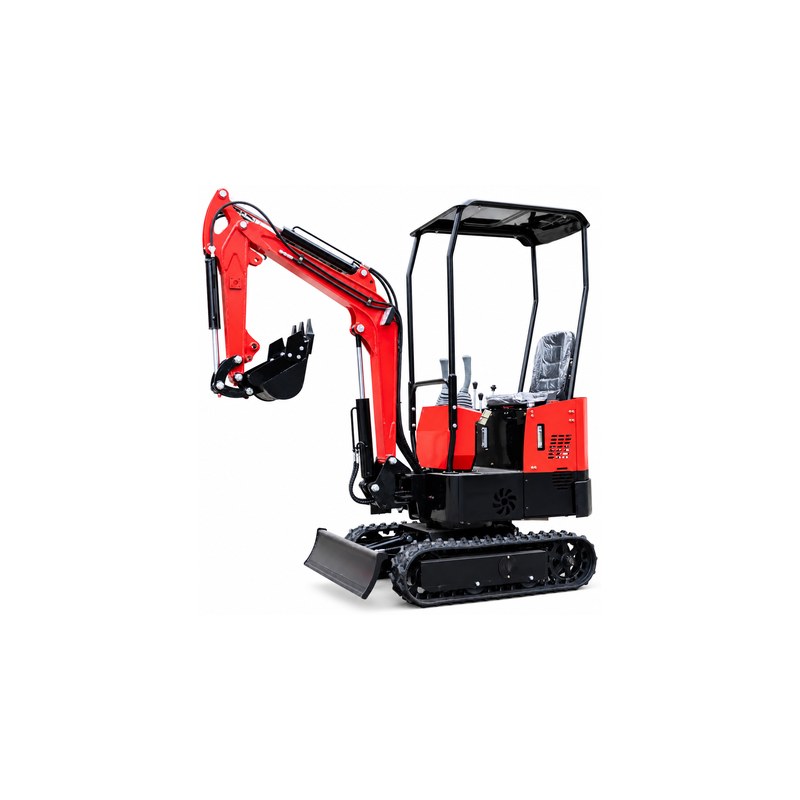
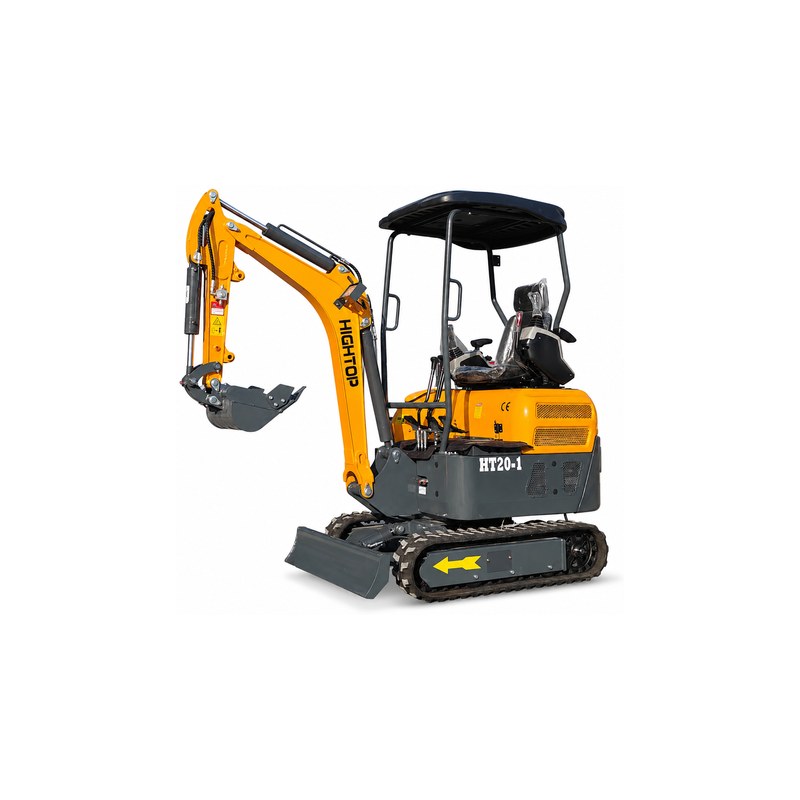
Choosing between a 1 ton and a 2 ton mini excavator is not simply a question of selecting the larger machine. Both sizes are designed for compact working environments, but they solve different problems. A 1 ton excavator can be especially useful where access is narrow and frequent transportation is required, while a 2 ton model generally offers additional digging depth, bucket capacity and working stability for more demanding excavation.
For contractors, landscapers, agricultural users, rental companies and equipment distributors, the correct choice depends on the actual jobsite rather than machine weight alone. Access width, trench depth, soil conditions, attachment requirements, transportation limits and expected workload should all be considered before selecting a machine.
A compact excavator is generally designed around a tracked or wheeled undercarriage, rotating upper structure and hydraulically operated working equipment. Within this category, moving from approximately one ton to two tons can noticeably change the balance between maneuverability and working capacity.
Quick Answer: 1 Ton or 2 Ton Mini Excavator?
A 1 ton mini excavator is generally the better choice when compact dimensions, narrow access and easy transportation are the highest priorities. It is particularly suitable for residential landscaping, garden work, small trenches, farm maintenance and other light excavation in confined spaces.
A 2 ton mini excavator is usually better when the project requires greater digging depth, a larger bucket, additional stability or longer periods of excavation. It still remains relatively compact, but offers more working capability for drainage, small construction, utility preparation and agricultural projects.
The basic difference can be summarized as follows:
| Comparison | 1 Ton Mini Excavator | 2 Ton Mini Excavator |
|---|---|---|
| Main advantage | Compact access | Greater working capacity |
| Typical operating weight | Around 1,000 kg | Around 2,000 kg |
| Best environment | Tight and restricted sites | Small to medium jobsites |
| Digging demand | Light excavation | Moderate excavation |
| Transport | Easier with smaller equipment | Requires greater transport capacity |
| Stability | Suitable for lighter work | Generally stronger working stability |
| Typical users | Landscapers, farms, property maintenance | Contractors, utilities, farms, rental fleets |
| Attachment demand | Light attachments | Broader working-tool requirements |
Neither machine is automatically better. The goal is to choose the smallest excavator that can complete the expected work efficiently without constantly operating at its limits.
Where a 1 Ton Mini Excavator Makes More Sense
The strongest advantage of a 1 ton mini excavator is its ability to work where larger machines may struggle to enter or maneuver.
Residential yards, gardens, narrow passages, greenhouses, orchards and small property-maintenance sites often provide limited operating room. On these projects, access can matter more than maximum digging force.
For example, Mingyang’s HT10B 1 Ton Mini Excavator has an operating weight of approximately 1,000 kg and an adjustable track gauge of 830–1,000 mm. Its compact structure is designed for working in gardens, farms, trenches and small construction areas where machine width is an important consideration.
A smaller excavator can also be useful when a contractor moves equipment between several jobsites during the week. Lower machine weight generally makes transportation planning easier, particularly where towing capacity and trailer dimensions are limited.
Typical 1 ton mini excavator applications include:
- Residential landscaping
- Garden renovation
- Small drainage trenches
- Fence installation
- Light foundation preparation
- Orchard maintenance
- Irrigation work
- Property maintenance
- Narrow-access excavation
For these jobs, additional machine weight may provide little practical benefit if the excavation itself is relatively light.
When a 2 Ton Mini Excavator Is the Better Choice
A 2 ton mini excavator becomes more attractive when the project requires greater digging performance without moving into a much larger machine category.
Compared with a 1 ton model, the additional weight generally supports improved stability, a larger working envelope and greater bucket capacity. This can make a significant difference when excavating deeper trenches or moving greater volumes of soil during a normal workday.
Mingyang’s HT20-1 2 Ton Hydraulic Mini Excavator has an operating weight of approximately 2,000 kg, a 0.04 m³ bucket and a maximum digging depth of approximately 2,060 mm. Its total width is approximately 1,100 mm, allowing it to remain relatively compact while providing more excavation capability than lighter micro excavators.
This type of machine is more appropriate for applications such as:
- Drainage preparation
- Utility trenches
- Small building projects
- Agricultural excavation
- Site preparation
- Property development
- Landscaping involving larger soil volumes
- Repeated excavation during longer working periods
A 2 ton machine is especially useful when the operator needs more working reserve. If a smaller excavator is constantly working close to its maximum digging depth or capacity, stepping up to a 2 ton model may improve productivity and reduce unnecessary repositioning.
Digging Depth Is One of the Biggest Differences
Digging depth is one of the most practical ways to compare a 1 ton and 2 ton mini excavator.
The HT10B 1 ton model has a maximum digging depth of approximately 1,650 mm, while the HT20-1 reaches approximately 2,060 mm.
That difference may appear modest on paper, but it can become important on actual jobsites.
A landscaping project involving shallow planting holes may never require the additional reach of the larger machine. A drainage project, however, may require trenches deep enough that the 1 ton excavator operates near its maximum working range.
Operating continuously at maximum reach is not always ideal. The operator may need to reposition the excavator more often, and bucket geometry may become less efficient near the end of the working range.
For buyers expecting deeper trenching or more varied excavation work, additional digging depth provides useful operating flexibility.
Bucket Capacity Affects Productivity
Bucket size also influences how quickly material can be moved.
The HT10B uses a 0.025 m³ bucket, while the HT20-1 is equipped with a 0.04 m³ bucket.
A larger bucket can move more material during each digging cycle, which may improve productivity when excavating loose soil or preparing larger areas. However, a larger bucket is not automatically better for every task.
Narrow utility trenches or precise landscaping may benefit from smaller buckets because they remove less unnecessary material. A smaller bucket can also be easier to control in confined environments.
The ideal bucket depends on both the machine and the project.
For continuous soil removal, a 2 ton excavator with additional bucket capacity may be more efficient. For detailed garden or residential work, the lighter 1 ton machine may provide enough capacity while maintaining better access.
Access Width Can Decide the Choice Before Performance Does
One of the biggest mistakes buyers make is comparing digging specifications before checking whether the machine can physically enter the work area.
A 2 ton excavator may offer better working capacity, but that advantage becomes irrelevant if it cannot pass through the entrance to the site.
Measure the narrowest part of the route before choosing the machine. This may include:
- Gates
- Garden paths
- Building entrances
- Greenhouse access
- Alleys between structures
- Space between trees
- Utility corridors
The HT10B’s compact chassis and adjustable track gauge make narrow access one of its key strengths.
The HT20-1 remains compact for its weight class, but its approximate total width of 1,100 mm means it requires more space.
For dealers and rental businesses, it can therefore make sense to offer both sizes rather than treating one as a direct replacement for the other. Different customers often have very different access conditions.
Stability Favors the Heavier Machine
Machine stability becomes increasingly important as digging force, reach and attachment weight increase.
A 2 ton excavator has more mass supporting the working equipment, which can provide a more stable platform during moderate excavation. This is useful when the bucket is extended farther from the machine or when heavier material is being handled.
A 1 ton machine is designed around lighter applications and should be operated within its intended working range.
This does not mean a lighter excavator is unstable. It means that stability must be considered relative to the work being performed.
Ground conditions also matter. Soft, uneven or sloping ground can change the behavior of either machine. Operators should evaluate surface conditions, machine orientation and available working space before excavation begins.
For frequent heavy digging, the additional weight of the 2 ton class generally offers more operating confidence. For light excavation in restricted areas, the smaller footprint of a 1 ton machine may still be more useful overall.
Which Is Better for Landscaping?
Both sizes can work well in landscaping, but they suit different types of projects.
A 1 ton mini excavator is particularly useful for residential landscaping where access is restricted and finished surfaces need to be disturbed as little as practical. It can handle tasks such as planting preparation, small drainage trenches, soil removal and garden reconstruction.
A 2 ton excavator becomes more useful when landscaping work involves larger volumes of soil, deeper drainage, retaining-wall preparation or repeated excavation across larger properties.
For a contractor mainly working in small residential gardens, a 1 ton machine may be more practical.
For a landscaping company working on both residential and commercial sites, the additional capacity of a 2 ton machine may provide greater flexibility.
The correct decision depends on the average project rather than the occasional largest job.
Which Is Better for Farm Work?
Farm and orchard applications can benefit from either size.
A 1 ton excavator can work well for:
- Irrigation preparation
- Small drainage channels
- Orchard maintenance
- Fence posts
- Light soil movement
- Work around barns and narrow farm structures
Its compact dimensions can be especially useful between trees or inside restricted agricultural areas.
A 2 ton excavator is better suited to deeper drainage, larger earthmoving tasks, regular ditch maintenance and other work where additional digging range improves productivity.
Terrain should also influence the decision. Agricultural land can include loose soil, mud and uneven surfaces. Buyers should therefore consider undercarriage design, track configuration, stability and ground clearance alongside operating weight.
Which Is Better for Construction?
For general construction, the 2 ton machine usually provides the broader working range.
Small foundations, trenching, utility preparation and repeated excavation often benefit from additional digging depth and bucket capacity.
However, there are situations where a 1 ton excavator remains the better construction tool.
Interior renovation, narrow residential sites, courtyards and projects behind existing buildings may have strict access limitations. A contractor may therefore gain more productivity from a smaller machine simply because it can reach areas where the larger excavator cannot.
This is why machine selection should always start with the work environment.
A larger machine is only more productive when there is enough space to use its additional capability.
Transportation Can Be a Deciding Factor
For contractors and rental companies, transportation is part of daily equipment use.
A 1 ton excavator generally requires less transport capacity than a 2 ton machine. This can simplify movement between landscaping projects, farms and residential sites.
The excavator itself is only part of the transport load. Buyers must also account for:
- Buckets
- Hydraulic attachments
- Fuel
- Loading equipment
- Trailer weight
- Tie-down equipment
A 2 ton excavator may require a different towing vehicle or trailer arrangement depending on local regulations and the equipment being transported.
If the machine will stay at one project for extended periods, this may not be a major issue. If it moves several times each week, transportation becomes much more important.
Rental businesses should pay particular attention because easier transportation can expand the number of customers capable of collecting or moving the machine safely.
Consider Attachments Before Choosing the Machine
Mini excavators become more useful when they can operate multiple working tools.
Typical attachments may include:
- Digging buckets
- Trenching buckets
- Grading buckets
- Augers
- Hydraulic breakers
- Grapples
- Rippers
A lighter 1 ton excavator can handle attachments suitable for its hydraulic system and machine weight, but heavier tools may make a 2 ton machine more appropriate.
Attachment weight affects machine balance, while hydraulically powered tools require suitable flow and pressure.
If the machine will spend most of its life using the standard bucket, attachment capability may be less important.
If it will regularly change between excavation, drilling and breaking tasks, hydraulic compatibility should become one of the main selection criteria.
Dealers should also consider which attachments are commonly requested in their local market. A versatile machine-and-attachment combination can serve a broader customer base than a machine selected only around standard digging.
Think About Daily Workload
Machine selection should reflect how many hours the excavator is expected to work and how demanding those hours will be.
A 1 ton excavator may be ideal for occasional residential excavation, property maintenance or short landscaping tasks.
For longer working days involving continuous digging, the additional capacity of a 2 ton machine can become more valuable.
The difference is not simply that the larger excavator can dig more. A machine working comfortably within its normal range may maintain better cycle efficiency than a smaller excavator repeatedly reaching its operational limits.
Ask how the machine will typically be used:
Will it dig for one or two hours at a time?
Will it work continuously throughout the day?
Will it mainly perform precision tasks?
Will it regularly handle dense soil?
Will hydraulic attachments be used often?
Answers to these questions often make the size decision much clearer.
1 Ton vs 2 Ton Mini Excavator by Application
| Application | 1 Ton | 2 Ton |
|---|---|---|
| Small residential gardens | Excellent fit | Suitable if access allows |
| Narrow pathways | Strong advantage | More restricted |
| Light landscaping | Excellent fit | Excellent fit |
| Larger landscaping | Suitable | Strong advantage |
| Farm maintenance | Suitable | Strong advantage for heavier work |
| Orchard access | Strong advantage | Depends on spacing |
| Shallow trenches | Excellent fit | Excellent fit |
| Deeper drainage | Limited by working range | Strong advantage |
| Utility preparation | Light work | More suitable |
| Small construction | Light applications | Strong advantage |
| Frequent transport | Easier | Requires more transport capacity |
| Heavier attachments | More limited | Better platform |
This comparison should be treated as a practical guide rather than a strict rule. Actual machine suitability depends on soil, access, attachment configuration and working method.
When Should You Choose the 1 Ton Model?
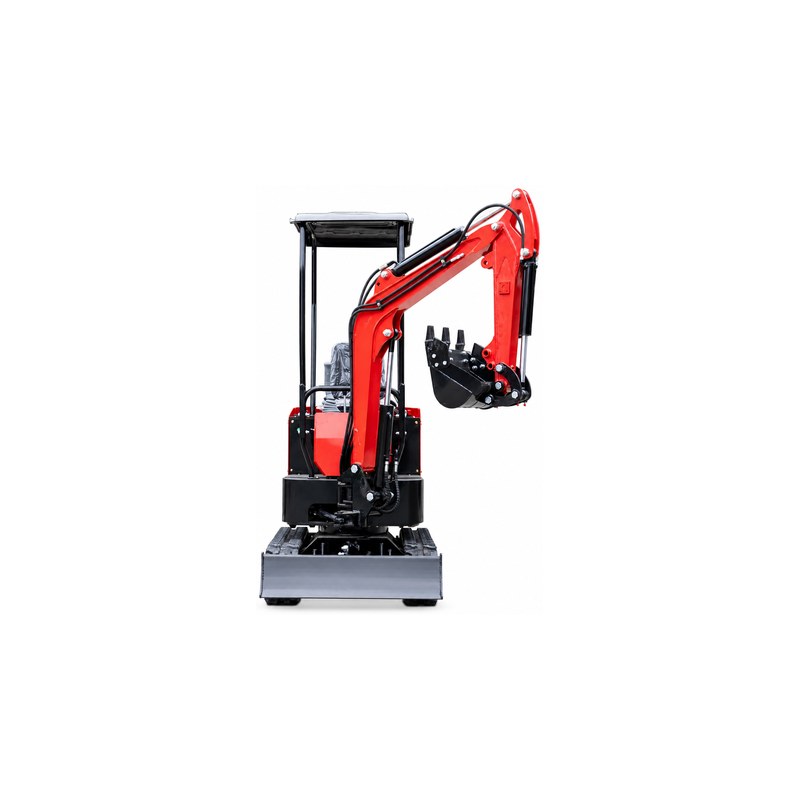
Choose a 1 ton mini excavator when your priorities are:
- Narrow access
- Compact storage
- Frequent transport
- Light excavation
- Residential landscaping
- Garden and property work
- Orchard or greenhouse access
- Shallow trenching
The 1 ton class is particularly attractive when space creates a bigger challenge than excavation capacity.
It is also useful for businesses that want a compact machine capable of completing many small jobs without moving to heavier construction equipment.
When Should You Choose the 2 Ton Model?
Choose a 2 ton mini excavator when you need:
- Greater digging depth
- Larger bucket capacity
- More working stability
- Moderate trenching
- Construction preparation
- Agricultural excavation
- Longer daily workloads
- Broader attachment use
The 2 ton class is a useful middle ground for users who need more capability than a micro excavator but still want relatively compact dimensions.
For contractors and rental companies serving several industries, this broader working range can be particularly valuable.
Common Selection Mistakes
One common mistake is choosing a 1 ton machine only because it is easier to transport, even when most projects require deeper or heavier excavation. If the excavator regularly reaches the limit of its working range, the original size advantage may be offset by slower productivity.
The opposite problem is choosing a 2 ton excavator when nearly every job takes place behind narrow gates or inside tightly landscaped areas. Additional machine capability provides little benefit if access becomes difficult.
Another mistake is comparing only engine output. Mini excavator performance depends on the complete combination of hydraulic system, bucket geometry, machine weight, undercarriage and attachment configuration.
Buyers should also avoid selecting a machine without considering transportation. Machine width and weight should always be compared with trailers, transport vehicles and the restrictions of the intended market.
How Dealers and Rental Companies Should Decide
Dealers and rental businesses should think differently from single-machine users because they serve multiple applications.
A 1 ton mini excavator can attract landscaping contractors, homeowners, farm users and businesses needing narrow-access equipment.
A 2 ton machine can appeal to a broader range of professional contractors who require additional digging capability.
For this reason, the two sizes are often complementary rather than competitive.
A dealer targeting residential and agricultural users may benefit from maintaining strong availability in the 1 ton class. A rental business serving utility, construction and landscaping customers may find the 2 ton category more versatile.
Market research should therefore consider:
- Typical local jobsite size
- Common trailer capacity
- Residential versus commercial construction activity
- Landscaping demand
- Agricultural use
- Attachment preferences
- Operator experience
The best-selling machine in one market may not be the best fit for another.
Conclusion
The difference between a 1 ton and 2 ton mini excavator is ultimately a trade-off between compact access and additional working capacity.
A 1 ton mini excavator is generally better for narrow spaces, residential landscaping, light farm work and jobs where frequent transportation matters. Its smaller footprint allows operators to reach areas that larger equipment may not easily access.
A 2 ton mini excavator is better suited to users who need greater digging depth, additional bucket capacity, improved stability and more flexibility for construction, drainage and agricultural excavation.
Rather than asking which machine is better overall, buyers should ask which one matches the majority of their real projects.
If access width and transportation are the main constraints, the 1 ton class is often the stronger choice. If deeper excavation and longer working cycles matter more, moving to the 2 ton class can provide a more suitable operating reserve.
Frequently Asked Questions
Is a 1 ton mini excavator enough for landscaping?
Yes. A 1 ton mini excavator can be very effective for residential landscaping, planting preparation, shallow drainage, soil removal and other jobs where access is limited. Larger landscaping projects may benefit from a 2 ton machine.
How much deeper can a 2 ton mini excavator dig?
The difference varies by model. Using the Mingyang HT10B and HT20-1 as examples, maximum digging depth increases from approximately 1,650 mm to approximately 2,060 mm.
Is a 2 ton mini excavator difficult to transport?
A 2 ton excavator requires greater transport capacity than a 1 ton model, but it remains within the compact excavator category. Buyers should check trailer capacity, towing limits and local transport regulations.
Which mini excavator is better for farms?
A 1 ton machine can be useful for orchard access, irrigation and light farm maintenance. A 2 ton model is generally better for deeper drainage and more demanding agricultural excavation.
Which size is better for rental businesses?
Both can be useful. A 1 ton excavator serves customers needing easy transport and narrow access, while a 2 ton excavator can support a wider range of professional excavation tasks.
Should I choose the smallest mini excavator that fits the site?
Not automatically. The machine also needs sufficient digging depth, hydraulic performance and stability for the expected workload. The best choice is the smallest model that can complete the majority of required tasks efficiently.